Beyond the Headlines of Gang Violence
Malmö, Sweden – You know Malmö from news headlines. “No-go zones.” Explosions. Police overwhelmed by gang wars. Politicians across Europe use it as a warning. A city defined by broken things.
Now look at the Malmö that’s quietly taking shape today.
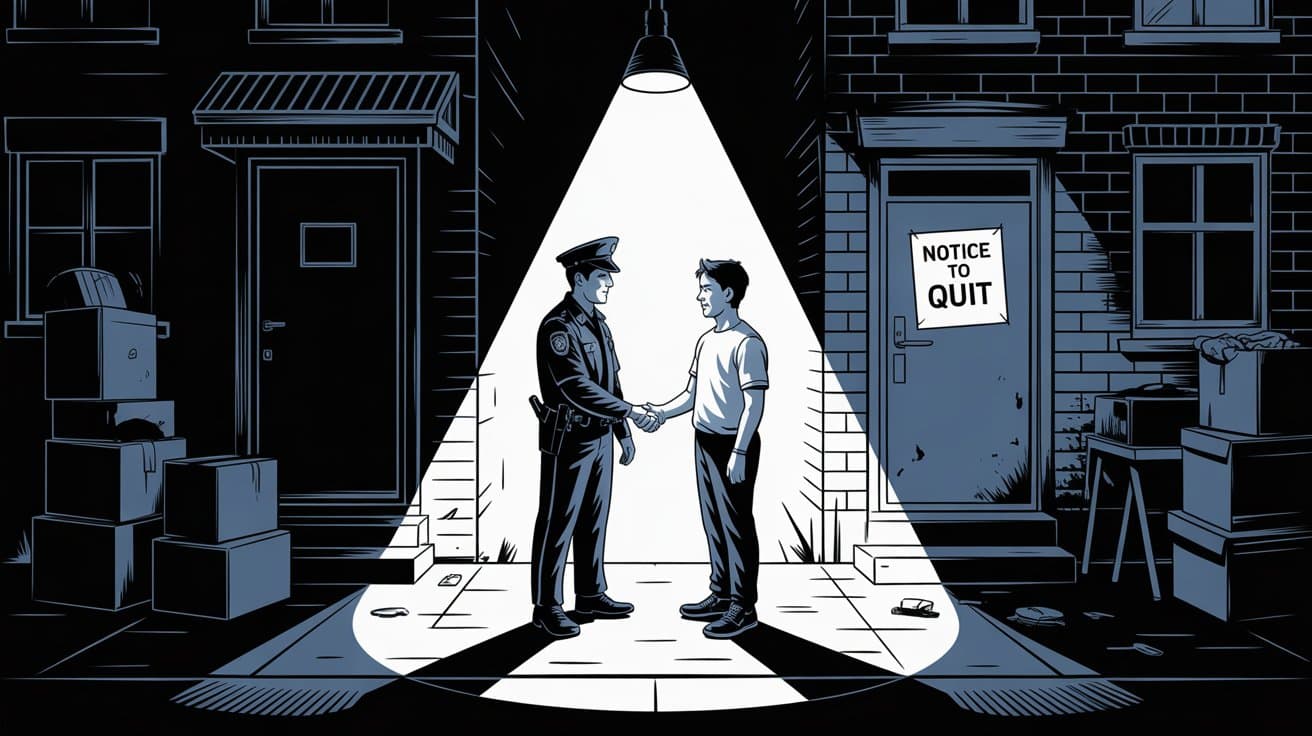
Police officers sit in living rooms with gang members’ mothers. Not to arrest them. To warn. To offer a way out. Social workers and housing companies share data. They stop evictions before they happen. A city trying to build trust where trust ran out years ago.
They call this shift Sluta skjut (Stop Shooting). The broader name is Group Violence Intervention. The idea sounds strange. To stop violence, you treat the perpetrators not just as criminals. As rational people. People you can reason with. People you can help.
New numbers from 2025 suggest it works. Shootings dropped more than 50 percent compared to the worst years. But the quiet on the streets hides other noise. Malmö is rewriting its social contract. Not everyone gets a seat at the table.
How does a city famous for its fractures try to heal itself while the gap between rich and poor just keeps growing?
The Numbers Tell The Story
Brå, the Swedish National Council for Crime Prevention, and Malmö University put out data. The picture is complicated.
Sluta skjut worked. Shootings per month fell after full implementation. The “custom notifications”-meetings between police, community leaders, and gang members-made a real difference.
But the Segregation Barometer, shows something else. Malmö is still deeply split. About 28 percent of people live in areas with “socioeconomic challenges.”
Violence went down. But the inequality index stayed high at 54. That means more than half of low-income residents would have to move to a different neighborhood just to spread wealth evenly.
Simple version. The bullets stopped flying. But the walls between neighborhoods are still tall.
The ‘Stop Shooting’ Paradox
This isn’t just police work. It’s about second chances.
Meet Hassan (Not real name).They gave him a choice. “The violence stops now. If it doesn’t, we come for your whole group. If the violence does stop, we will help you.”
Hassan took the help. Today he works in logistics.”
They didn’t just threaten me,” he says. “They gave me a phone number that actually worked. I got a job. Not just a lecture.”
Now meet Elin(Not real name). Fifty-five years old. Single mother in Limhamn, a wealthier part of Malmö. Worked as an administrator for thirty years. Her rent just went up 12 percent after a renovation she never asked for. She’s part of the new housing precariat.
“I see millions going into projects for the gangs,” Elin says. “I see job programs and support. But I’m drowning in rent. There’s no special project for me. I followed all the rules. And I feel like I’m getting pushed out of my own city.”
Hassan and Elin live in the same city. Hassan got targeted mercy.Elin got an indifferent market.
The Government’s 2026 Answer: ‘The Strict & The Supportive’
City leaders call it the Malmö Model. Hard boundaries. Soft hands.
For 2026, the strategy expands. GVI now applies not just to gangs but to domestic violence. They call it Trygg Relation. The city also pushes a Climate City Contract. Wants Malmö to become a green leader.
“Renovictions”
Critics see a blind spot. Focus is on extremes. Violent criminals. Green elite. The middle gets left in the gap. People like Elin struggling with housing. Immigrant families who aren’t criminals but can’t find steady work.
The housing market runs on “renovictions.” Eviction by renovation. Pushes lower-income families further out. Creates new pockets of exclusion even as old ones get “fixed.”
The Public Feeling
People in Malmö feel the change. But they’re wary.
Trust surveys show a split. In neighborhoods targeted by Sluta skjut, trust in police actually rose. People feel safer walking at night.
But in the broader working class? A sense of unfairness creeps in. A trust gap opens. Not between rich and poor. Between people the system sees as problems to solve and people it barely notices.
Back to the Two Pictures
So back to two pictures of Malmö.
Old picture. The welfare state was a blanket. Covered everyone equally. But too thin to stop gang violence’s sharp edges.
New picture. The welfare state is a laser. Targets the most dangerous problems with precision and resources. But a laser leaves the rest of the room dark.
Sluta skjut worked. But it asks a hard question. Can you build a safe city by focusing only on the shooters while the housing market quietly pushes out the neighbors?
The sirens are quieter in Malmö tonight. But the silence carries questions nobody answers.
Leave a Reply