Category: SPECIAL PACKAGES

  • The Silent North

    The Silent North

    Rural Abandonment in Västerbotten.

    The Silent NorthRural Abandonment in Västerbotten

    Västerbotten, Sweden-You remember the old image of Northern Sweden. Busy forestry roads. Small sturdy villages. Every town had a police station. Every village had a school. The “folkhemmet”-the people’s home-stretched all the way to the Norwegian border.

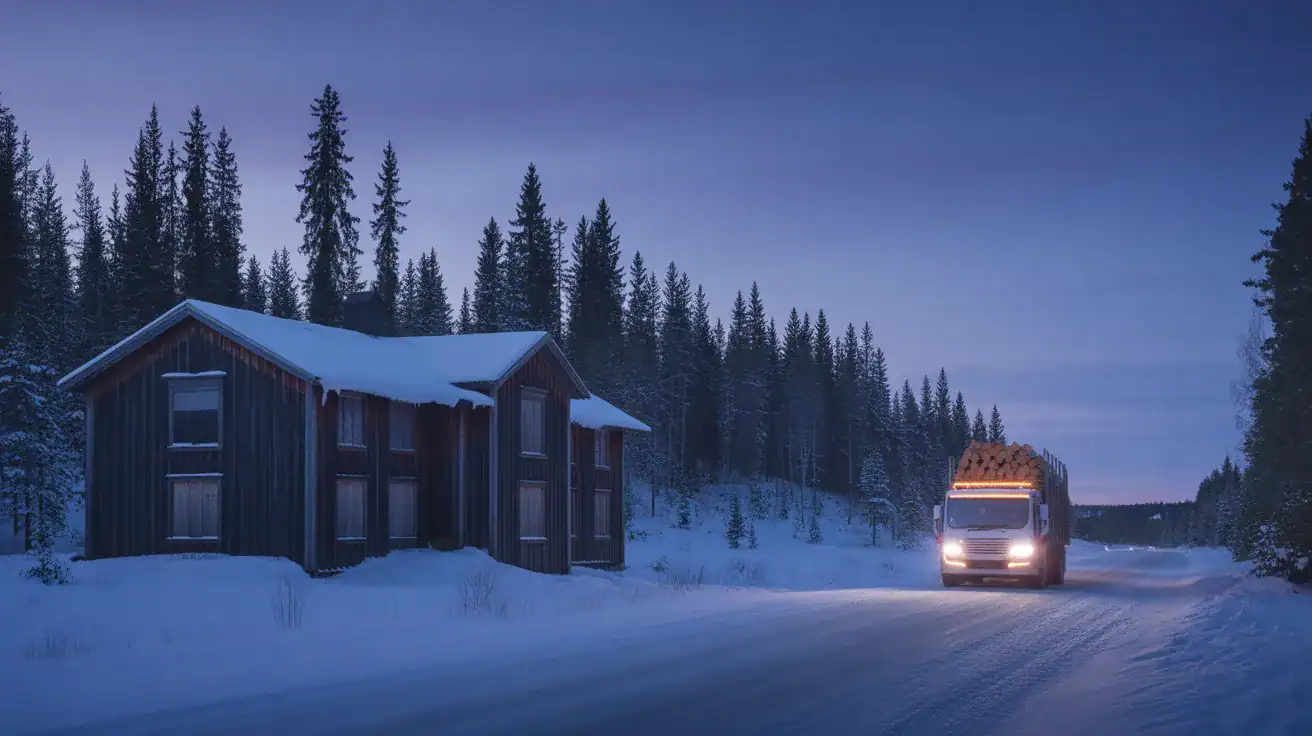
    Now look at the interior today. Roads are quiet. Except for huge logging trucks hauling timber to the coast. The village center windows are dark. The police station is ninety minutes away. The maternity ward closed years ago.

    “Centralisering”

    They have a name for this shift. Centralisering (Centralization). An economy built on gathering people and services in coastal cities. Saves money. For decades, everyone called it inevitable. It made cities efficient. It left the interior empty.

    New analysis shows the result clearly. Västerbotten is now two different worlds. The booming coast. The dying interior.

    How did a region rich in timber, hydropower, and minerals become a desert of public services?

    The Numbers Tell The Story

    Statistics Sweden data paints a clear picture of this retreat.

    In 1970, the municipality of Åsele had over 5,000 residents. A functioning hub. Today? Fewer than 2,800. Same story in Sorsele. Dorotea. Malå.

    The coastal city of Umeå grows fast. Aiming for 200,000 people. Meanwhile, the interior shrinks. But the drain isn’t just people. It’s money.

    A WSP report shows that natural resources get pulled from the interior. But tax revenue lands elsewhere. Hydroelectric dams in the north produce a huge share of Sweden’s electricity. Yet the property tax from those dams goes mostly to the state in Stockholm. Not to local communities.

    Simple version. The interior provides the engine’s fuel. The coast gets the mileage.

    A Tale of Two Västerbottens

    This isn’t just geography. It’s survival.

    Meet Erik (Not his real name). Thirty-eight years old. Urban planner in Umeå. Designs “smart city” zones. His kids go to a school five minutes from home. He breaks a leg? The university hospital is a short bus ride away.”

    Density creates innovation,” Erik says. “It’s expensive to keep pipes and roads working for three houses in the forest. People need to move where jobs are. It’s sustainable.”

    Now meet Berit(Not his real name). Seventy-two years old. Lives outside Sorsele. Runs a small “service point.” A shop that also acts as pharmacy, post office, and Systembolaget agent. Last winter, power lines fell under heavy snow. Her village waited three days for help.”

    They want the iron, the wood, the wind power,” Berit says. “But they don’t want the people who live here. When I call an ambulance, I count hours. Not minutes. We’re on our own.”

    Erik and Berit live in the same county. But they live in different centuries of service. Erik lives in a modern welfare state. Berit lives on a frontier outpost.

    The Government’s Answer: ‘The Green Transition’

    The government sees a bright future. Calls it the “Green Industrial Transition.”

    Billions of kronor pour into Northern Sweden. Green steel factories. Battery plants. The promise is that this “new industrialization” will save the North.

    Critics look at the map. The factories sit on the coast. Skellefteå. Luleå. Boden.

    For the interior, the “transition” looks different. More wind farms. More mines. Those need temporary workers, not families.

    The government offers “digital solutions” to replace physical clinics. A doctor on an iPad instead of a doctor in the village.

    Berit knows something. An iPad cannot set a broken bone. Cannot plow a road. The investment helps the GDP. It doesn’t keep the village school open.

    The Public Feeling

    People in the interior feel this abandonment. The SOM Institute at the University of Gothenburg tracks trust in society.

    Their surveys consistently show a “trust gap.” Satisfaction with democracy and public services runs much lower in the rural north than in the urban south.

    A majority of residents in these “shadow municipalities” feel national politicians don’t understand their reality.

    Visceral feeling. You hear it at the local gas station. People see their rivers generating power for the south. Meanwhile, they pay some of the highest municipal taxes in the country. Just to keep snowplows running.

    Back to the Two Pictures

    So back to two pictures of the North.

    Old picture. The whole country was meant to be lived in. The land’s resources supported the people on the land.

    New picture. The North is a resource colony. A place to extract energy and materials. To support green cities on the coast.

    The retreating services ask a simple question. Is the interior of Sweden for living? Or just for taking?

    Snow falls in Sorsele. The silence gets louder.

  • The Farmers’ Revolt: A View from the Tractor

    The Farmers’ Revolt: A View from the Tractor

    We followed for a week the happenings with agricultural unions in France. Their demands aren’t what mainstream media reports.

    Montauban, France-You know the postcard version of French farming. A wine bottle. A wheel of cheese. A sunlit village frozen in 1950. A lifestyle brand.

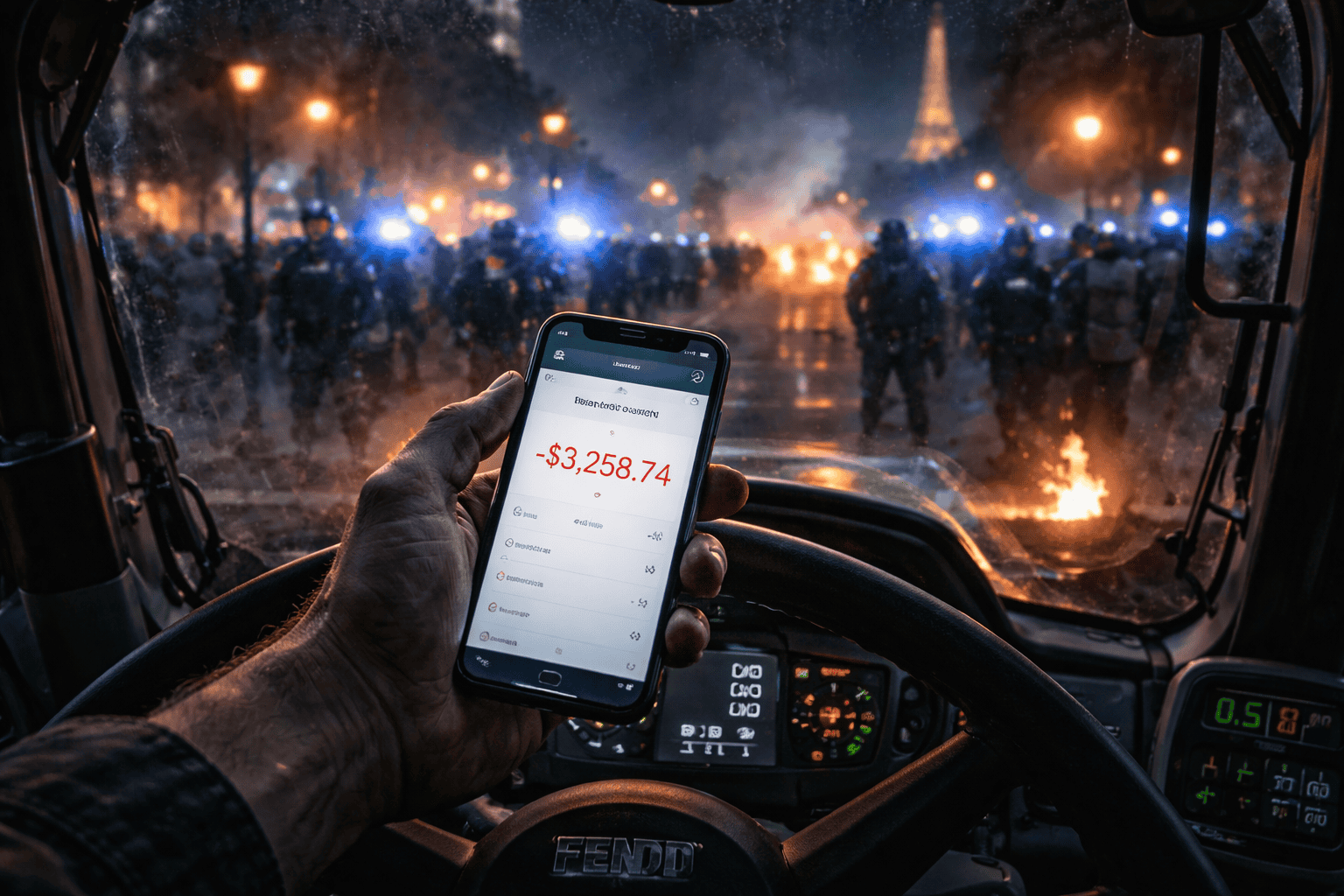
    Now step inside the cabin of a Fendt tractor parked on the A13 motorway outside Paris. The air smells like burned tires and diesel. The driver isn’t watching the sunset. He’s staring at a bankruptcy notice on his phone. Sleeping in his cab. Eating cold sandwiches. Riot police watch from the overpass.

    They call this la fracture agricole. The agricultural fracture. The sound of a social contract breaking.

    For decades, France promised its farmers protection. In exchange, farmers gave the country food security. Now farmers feel they’re being sold off. To make room for imported beef. For electric cars.

    New data shows the quiet collapse behind the loud protests. France is losing farms at a rate that would be a national scandal in any other business.

    Why do the people who feed Europe believe Europe wants them dead?

    The Numbers Tell The Story

    News cameras focused on burning hay bales. But the real story lived in spreadsheets.

    French Ministry of Agriculture and union data say France loses about 10,000 farms every year. That’s 27 farms disappearing daily.

    The government says inflation stabilized at 0.8 percent. For farmers, the math looks different. Input costs – machinery, energy, compliance – shot up. But the prices they can charge? Locked by supermarkets and global competition.

    Then there’s the EU-Mercosur trade deal. Signed January 17, 2026, in Paraguay. Eliminates tariffs on 91 percent of goods. Brussels calls it a win for GDP. French farmers call it a death sentence. It opens the door to 99,000 tons of South American beef. Beef that doesn’t have to meet the strict environmental standards French farmers live under.

    Simple version. The French farmer runs a race in heavy boots. His competitors run barefoot.

    A Tale of Two Europes

    This isn’t just about subsidy checks. It’s about dignity.

    Meet Pierre(Not real name). Fifty-two years old. Cattle farmer in Tarn-et-Garonne. Affiliated with the Coordination Rurale. His hands are stained with grease and soil. Works seventy hours a week. Last year his net income fell below minimum wage.”

    The TV says we’re angry about diesel tax,” Pierre says. Voice flat. “It’s not the fuel. It’s the lie. They ban me from using certain fertilizers to ‘save the planet.’ Fine.

    Then they sign a deal to bring in meat from Brazil. Where they cut down rainforest to graze cows. They don’t want to save the planet. They just want to outsource pollution and buy cheaper food.”

    Now meet Sophie (Not real name). Thirty-five years old. Sustainability consultant in Paris. Buys organic. Supports the Green Deal. Believes French agriculture’s future is agri-tech and high-end exports.”

    We can’t support inefficient farms forever,” Sophie argues over an oat milk latte. “The transition is painful, yes. But we need a less carbon-intensive model. If we can import grain more efficiently, we should. France should focus on value, not volume.”

    Pierre and Sophie share the same country. But they live in different economies. Sophie’s world is post-industrial services. Pierre is trapped in a dying industrial reality.

    The Government’s Answer: ‘The Checkbook of Silence’

    The government’s response to the January 2026 blockade followed a classic playbook. Money. Delay.

    Prime Minister Sébastien Lecornu announced an emergency aid package. €300 million. A “pause” on water regulations. The mainstream media called it a victory. Blockades lifted.

    Farmers who have spoken called it hush money.

    “They give us a check to pay bank interest for one year,” Pierre says.”But they don’t change the rules of the game. The Mercosur deal is signed. Supermarkets still set the price. Next winter, the money is gone. The problem stays.”

    Unions argue the government treats symptoms. Lack of cash. Ignores the disease. Unfair competition.

    The Public Feeling

    You’d think the public would be angry. Tractors blocked roads. Delayed flights. Choked Paris.

    Polls show something else. An Odoxa survey from early January found over 80 percent of French people supported the movement.

    Solidarity of the gut. Powerful. The French public knows something. When farms disappear, something essential to the nation’s identity goes with them. They see farmers not as a nuisance. As the last defense against a standardized, globalized food system.

    Back to the Two Pictures

    So back to the tractor cabin.

    Old picture. The farmer was the steward of the land. Guardian of the terroir. The heart of France.

    New picture. The farmer is a variable in a global equation. An obstacle to a trade deal. A “carbon emitter” to be managed.

    The tractors left Paris. For now. But the engines are still warm. Farmers ask a question Brussels hasn’t answered.

    Do you want a Europe that grows its own food? Or a Europe that just imports it?

    The revolt wasn’t about diesel prices. It was about the price of existence.

  • Malmö’s New Social Contract

    Malmö’s New Social Contract

    Beyond the Headlines of Gang Violence

    Malmö, Sweden – You know Malmö from news headlines. “No-go zones.” Explosions. Police overwhelmed by gang wars. Politicians across Europe use it as a warning. A city defined by broken things.

    Now look at the Malmö that’s quietly taking shape today.

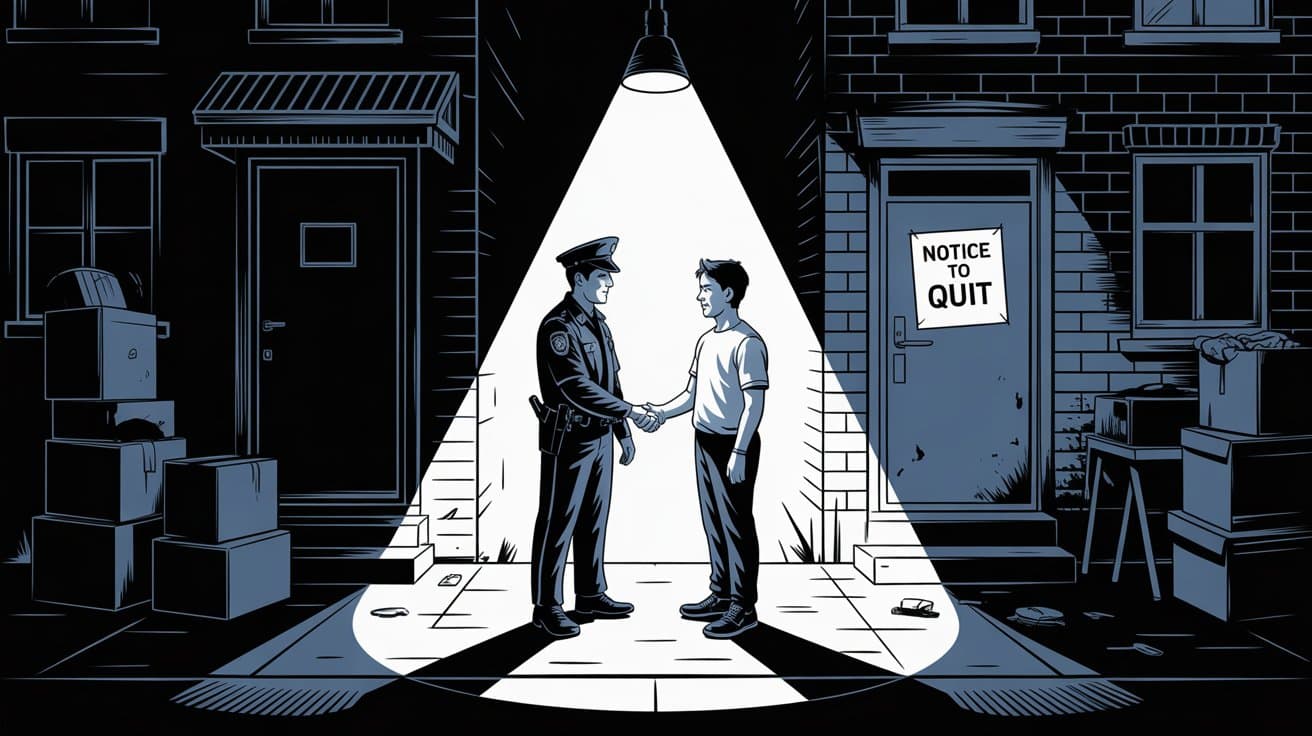
    Police officers sit in living rooms with gang members’ mothers. Not to arrest them. To warn. To offer a way out. Social workers and housing companies share data. They stop evictions before they happen. A city trying to build trust where trust ran out years ago.

    They call this shift Sluta skjut (Stop Shooting). The broader name is Group Violence Intervention. The idea sounds strange. To stop violence, you treat the perpetrators not just as criminals. As rational people. People you can reason with. People you can help.

    New numbers from 2025 suggest it works. Shootings dropped more than 50 percent compared to the worst years. But the quiet on the streets hides other noise. Malmö is rewriting its social contract. Not everyone gets a seat at the table.

    How does a city famous for its fractures try to heal itself while the gap between rich and poor just keeps growing?

    The Numbers Tell The Story

    Brå, the Swedish National Council for Crime Prevention, and Malmö University put out data. The picture is complicated.

    Sluta skjut worked. Shootings per month fell after full implementation. The “custom notifications”-meetings between police, community leaders, and gang members-made a real difference.

    But the Segregation Barometer, shows something else. Malmö is still deeply split. About 28 percent of people live in areas with “socioeconomic challenges.”

    Violence went down. But the inequality index stayed high at 54. That means more than half of low-income residents would have to move to a different neighborhood just to spread wealth evenly.

    Simple version. The bullets stopped flying. But the walls between neighborhoods are still tall.

    The ‘Stop Shooting’ Paradox

    This isn’t just police work. It’s about second chances.

    Meet Hassan (Not real name).They gave him a choice. “The violence stops now. If it doesn’t, we come for your whole group. If the violence does stop, we will help you.”

    Hassan took the help. Today he works in logistics.”

    They didn’t just threaten me,” he says. “They gave me a phone number that actually worked. I got a job. Not just a lecture.”

    Now meet Elin(Not real name). Fifty-five years old. Single mother in Limhamn, a wealthier part of Malmö. Worked as an administrator for thirty years. Her rent just went up 12 percent after a renovation she never asked for. She’s part of the new housing precariat.

    “I see millions going into projects for the gangs,” Elin says. “I see job programs and support. But I’m drowning in rent. There’s no special project for me. I followed all the rules. And I feel like I’m getting pushed out of my own city.”

    Hassan and Elin live in the same city. Hassan got targeted mercy.Elin got an indifferent market.

    The Government’s 2026 Answer: ‘The Strict & The Supportive’

    City leaders call it the Malmö Model. Hard boundaries. Soft hands.

    For 2026, the strategy expands. GVI now applies not just to gangs but to domestic violence. They call it Trygg Relation. The city also pushes a Climate City Contract. Wants Malmö to become a green leader.

    “Renovictions”

    Critics see a blind spot. Focus is on extremes. Violent criminals. Green elite. The middle gets left in the gap. People like Elin struggling with housing. Immigrant families who aren’t criminals but can’t find steady work.

    The housing market runs on “renovictions.” Eviction by renovation. Pushes lower-income families further out. Creates new pockets of exclusion even as old ones get “fixed.”

    The Public Feeling

    People in Malmö feel the change. But they’re wary.

    Trust surveys show a split. In neighborhoods targeted by Sluta skjut, trust in police actually rose. People feel safer walking at night.

    But in the broader working class? A sense of unfairness creeps in. A trust gap opens. Not between rich and poor. Between people the system sees as problems to solve and people it barely notices.

    Back to the Two Pictures

    So back to two pictures of Malmö.

    Old picture. The welfare state was a blanket. Covered everyone equally. But too thin to stop gang violence’s sharp edges.

    New picture. The welfare state is a laser. Targets the most dangerous problems with precision and resources. But a laser leaves the rest of the room dark.

    Sluta skjut worked. But it asks a hard question. Can you build a safe city by focusing only on the shooters while the housing market quietly pushes out the neighbors?

    The sirens are quieter in Malmö tonight. But the silence carries questions nobody answers.