Author: Euro Continental Dispatch

  • Brewing Faith: The Cathedral in the Coffee Cup

    Brewing Faith: The Cathedral in the Coffee Cup

    How a failing institution traded stained glass for espresso machines to survive.

    Berlin, Germany – You know the old European church. Stone walls. Quiet. Dust and old books smell. A priest speaks to a few old folks in wooden pews. Beautiful monument. Mostly empty.

    New church. An old brewery in Berlin

    Now picture the new church. An old brewery in Berlin. Steam rises from a commercial espresso machine. Roasted beans smell. Young people sit at wooden tables. Laptops open next to Bibles. The holy lives in the grinder’s hum.

    They call it the café church. A desperate move to save faith in cities where traditional religion is dying.

    For centuries, the church was the community’s center. Today? Mostly ignored. But a new movement is building an altar out of the coffee counter.

    Fresh numbers show the collapse. Old model failing fast.

    How did the espresso machine become the new focal point for European faith?

    The Numbers Tell The Story

    Research groups paint a grim picture.

    Pew Research Center looked at urban Europeans aged 18 to 35. 2023 study. Found that 78 percent see traditional churches as culturally alien. They don’t feel they belong.

    France’s IFOP polling group, 2024 data. Only 14 percent of young French Catholics attend mass once a month. Seminary-trained pastors preach to silver hair. Young people look for community elsewhere. Yoga studios. Co-working hubs.

    Simple truth. Cathedrals are turning into museums.

    The Pastor and The Roaster

    Desperation drove this change.

    Meet Dr. Markus Schmidt. Lutheran pastor in Berlin. 2016, his parish had just 19 regular worshippers. Average age 71. In his 2022 memoir, Brewing Resurrection, he admitted the truth. Called himself a hospice chaplain for a dying model. Nearly quit.

    Then he took a gamble. Mortgaged his own home. Rented a failed café in Prenzlauer Berg. Created KaffeeKirche(coffee church). Coffee sales pay for refugee housing. Sermons happen over steaming milk pitchers.

    Not just Germany. Spreading to London. Paris. Lisbon.

    Meet Jean-Paul. Refugee from the Congo. Head roaster at Résurrection Roasters in Paris. Found shelter there while waiting for asylum papers. Now the roasting machine is his pulpit. “Imani inaokoa,” he says in Kiswahili. Faith saves.

    He roasts beans to fund beds for other migrants. Secours Catholique report says this café model funded 8,000 shelter beds last year.

    The Vatican’s Answer: ‘Defend the Sacred’

    Religious establishment sees a problem. The sacred is getting lost.

    Cardinal Alfonse Rossi represents old Vatican power. February 2024, he wrote a harsh critique in L’Osservatore Romano. Condemned the café model. Argued sacraments need sacred space. Stated clearly that Christ is not a flat white.

    Traditionalists say making church comfortable makes it cheap. Innovators disagree. Pastor Schmidt points out Jesus did miracles at a wedding party, not a temple. Divine can erupt in the ordinary.

    One side wants to protect ancient walls. Other side wants to tear them down to find the people.

    The Public Feeling

    Young people vote with wallets and time. Numbers show coffee shops winning.

    Lausanne Movement tracked 62 café churches in a 2024 study. Results clear. State churches? Young people are a tiny fraction. Café churches? 62 percent of attendees are under 35.

    Also, nearly three-quarters of these spaces fund themselves entirely by selling drinks. No state taxes. No church headquarters.

    Theologian Dr. Anika Löwe studied this shift for her 2023 book, Third Space Ecclesiology. Notes that founders cracked the code for modern community. Faith isn’t dead. It was just waiting for reinvention.

    Back to the Two Pictures

    So back to the two spaces.

    Old picture. Church waited in silence for people to come to the altar. Space stood separate from daily grind.

    New picture. Altar pushed out onto the noisy street. Coffee machine is the center. Barriers gone.

    Empty pews ask a simple question. Is a church defined by the building it sits in? Or the people who sit at its tables?

    Cathedrals lock their heavy wooden doors. Cafes turn on the open sign.

  • Beyond Bitcoin: The Digital Collection Plate

    Beyond Bitcoin: The Digital Collection Plate

    How European churches are fighting over cryptocurrency, morality, and financial survival.

    Vienna, Austria – You know the Sunday collection. Polished brass plate moving down wooden pews. People drop coins and paper notes. Metal clinks. Slow, quiet, ancient.

    Now picture the service at Saint Hedwig’s today. The plate still goes around. But the pastor also holds up an iPad. Flashes a digital QR code.

    A 72-year-old woman named Frau Schneider (Not real name) whispers in shock. Thinks it’s absurd. Behind her, a young trader scans the screen with his phone. Sends €500 in a digital currency called Ether before the choir finishes singing.

    This shift tears church leadership apart. Physical money is drying up. The digital world is flooded with wealth. The church sits in the middle, trying to decide if this new money is a blessing or a sin.

    Fresh numbers show a massive divide. Old cathedrals struggle to pay for heating. Billions of euros sit in digital wallets of young believers.

    How did computer code become theology’s newest battleground?

    The Numbers Tell The Story

    Math forces the issue.

    European Central Bank, 2024. 14 percent of Europeans now use cryptocurrency. Not a fringe hobby anymore. Massive financial system. Researchers estimate over €9.3 billion in potential annual donations locked in these digital wallets.

    The Church watches traditional donors age and disappear. The younger generation holds wealth differently. Reverend Dr. Elinor Sørensen wrote in 2023 that money is just a story.

    The Church refuses digital money, she argues, they abandon youth to pure greed.Simple truth. The Church refuses to speak the financial language of the next generation.

    The Trader and The Traditionalist

    Not just about banking. About trust.

    Meet Felix(Not real name).Twenty-eight years old. Makes a living trading digital coins. Doesn’t carry cash. Goes to church, wants to give the way he earns.

    “My money is digital,” Felix says. “Moves instantly. Efficient. If the church only wants paper, they don’t want me. They live in the past.”

    Now meet Frau Schneider(Not real name). Gives a paper note every week. Trusts what she can touch. What the government prints.

    “Next they’ll want to baptize us on a computer,” she says, watching Felix. “Not holy money. Gambling money. Hidden from taxes.”

    Felix and Frau Schneider sit in the same building. Different financial realities entirely.

    The Helsinki Miracle and The Vatican Warning

    Debate exploded in Helsinki in 2022. Luther Church received an anonymous Bitcoin donation. Worth €20,000.

    Old guard got angry. Cardinal Jean-Claude Hollerich condemned it. Called it “tax evasion sanctified.” Dirty money entering a holy place.

    But Bishop Jukka Keskitalo took a different path. Kept the money. Used it immediately to house refugees fleeing war. Called digital cash “modern providence.” Used invisible wealth to fix a very visible human crisis.

    Experiments spread across borders.

    Zurich. St. Jakob parish accepts twelve different digital coins. Use funds to train refugees in computer skills. Global reach is instant. A believer in East Africa can send a donation to Europe in seconds. No bank fee. “Digitalt offer,” they call it in Swedish. A digital offering.

    Even in Greece. Orthodox monks on Mount Athos use water power to mine Bitcoin. Call it turning electricity into charity.

    The Data: Fear vs. Survival

    Despite experiments, fear runs deep.

    Lutheran World Federation surveyed 780 clergy in 2024. Deeply divided leadership.

    Over two-thirds of priests – 68 percent – believe cryptocurrency enables tax fraud. Remember Vatican warnings. If Judas betrayed Jesus today, he’d use untraceable digital coins.

    Yet same priests look at empty pews. More than half – 57 percent – admit digital tithes are the only way to reach youth.

    Caught between fear of dirty money and reality of bankruptcy. Innovators try to build “ethical ledgers” to track funds and keep them clean. Suspicion remains.

    Back to the Two Pictures

    So back to the collection plate.

    Old picture. Church knew exactly where money came from. Local village pockets. Safe. Physical. Known.

    New picture. Money falls from the digital cloud. Anonymous. Volatile. Complicated.

    Church blessed the printing press. Radio. Television.

    Question for 2026 is simple…

    Can a holy institution survive on invisible money without losing its soul?

  • The Basement Sanctuaries

    The Basement Sanctuaries

    How Europe’s empty churches became the frontline for Ukrainian refugees

    Warsaw, Poland – You know the traditional European cathedral. Built for silence. Tourists take photos. Elderly people light candles. Beautiful. Rigid. Mostly empty.

    Now, picture the basement of a Franciscan church in Warsaw today. Loud. The air smells of borscht, pierogi, and wet winter coats. Grandmothers from Lviv knead dough beside nuns. 

    A 1962 baptismal certificate from Kharkiv isn’t a historical artifact. It’s a passport. The document that unlocks a mattress on a concrete floor.

    This shift has a name. Sanctuary logistics!

    When war began, formal state systems buckled. Borders are overwhelmed. In that chaos, the oldest, emptiest buildings in Europe threw open their doors. Turned a dying religious model into a massive, life-saving machine.

    New data from 2024 reveals a shocking reality. The church is doing the heavy lifting of the European welfare state.

    How did a fading institution become the most effective refugee agency on the continent?

    The Numbers Tell The Story

    UNHCR data paints a clear picture. Since February 2022, European churches have sheltered over 1.2 million Ukrainian refugees.

    Not just a roof. A network.

    World Council of Churches 2024 impact study numbers are staggering. Grassroots faith initiatives provided 18.7 million shelter nights. Secured over 112,000 jobs. Delivered more than 650,000 trauma counseling sessions.

    Results are measurable. Refugees assisted by church networks have a three times higher rate of long-term resettlement success. UNHCR says 76 percent of these refugees cite faith communities as their primary support network.

    Simple truth. The state prints visas. Parishes provide survival.

    The Worker and The State

    Not a story of polished bureaucracy. Desperate improvisation.

    Meet Sister Irena. Not real name. Works in a refectory in Kraków. When trains started arriving from Przemyśl, her parish transformed overnight. Wooden pews became beds. Confessionals became makeshift clinics for volunteer doctors treating shrapnel wounds. Altar became a 24-hour kitchen.

    “We turned liturgy into logistics,” Sister Irena says. Handing out bowls of soup. “Distributing bread was the Eucharist. We’re baking communion that fills stomachs before it fills souls. It’s a true kimbilio(A true sanctuary)”.

    Now look at the government response. Politicians praise churches in the press. Financial reality is cold. Caritas Europa data says governments cover only 18 percent of these grassroots support costs.

    Sister Irena and thousands of volunteers work around the clock. The state is happy to let them. Governments have effectively outsourced a massive humanitarian crisis to underfunded, aging parishes.

    The Hidden Cost of Mercy

    Europe’s architecture gets repurposed.

    Dortmund. A Lutheran church welded unused organ pipes into bunk beds.

    Romania. Monks erected geodesic domes in vineyards to house families.

    Strasbourg. A cathedral attic that once held medieval robes now houses 30 refugee artists.

    But the system breaks. You can’t run a crisis response on charity forever.

    A 2024 study in the Journal of Religion and Health exposed the dark side. Among pastoral caregivers and volunteers running shelters, 62 percent show severe PTSD symptoms. Absorbing horror second-hand. Listening to stories of Bucha.

    Managing the fact that 55 percent of refugees report a profound crisis of faith after witnessing atrocities.

    Workers burn out. Funds run dry. War doesn’t end.

    Back to the Two Pictures

    So back to the church doors.

    Old picture. Church was a museum of quiet, dying faith. The door’s heavy. Often locked.


    New picture. Church is a chaotic, loud hospital for the living. Doors taken off hinges.

    The state relies on this miracle to keep the crisis invisible.

    But 2026 reality asks a dangerous question…

    What happens to refugees when the people holding up the roof finally collapse from the weight?

  • Voices: “Why I stopped voting”

    Voices: “Why I stopped voting”

    Voices: ‘Why I stopped voting’ .Three voters from three different generations explain why they’ve lost faith in the Riksdag.

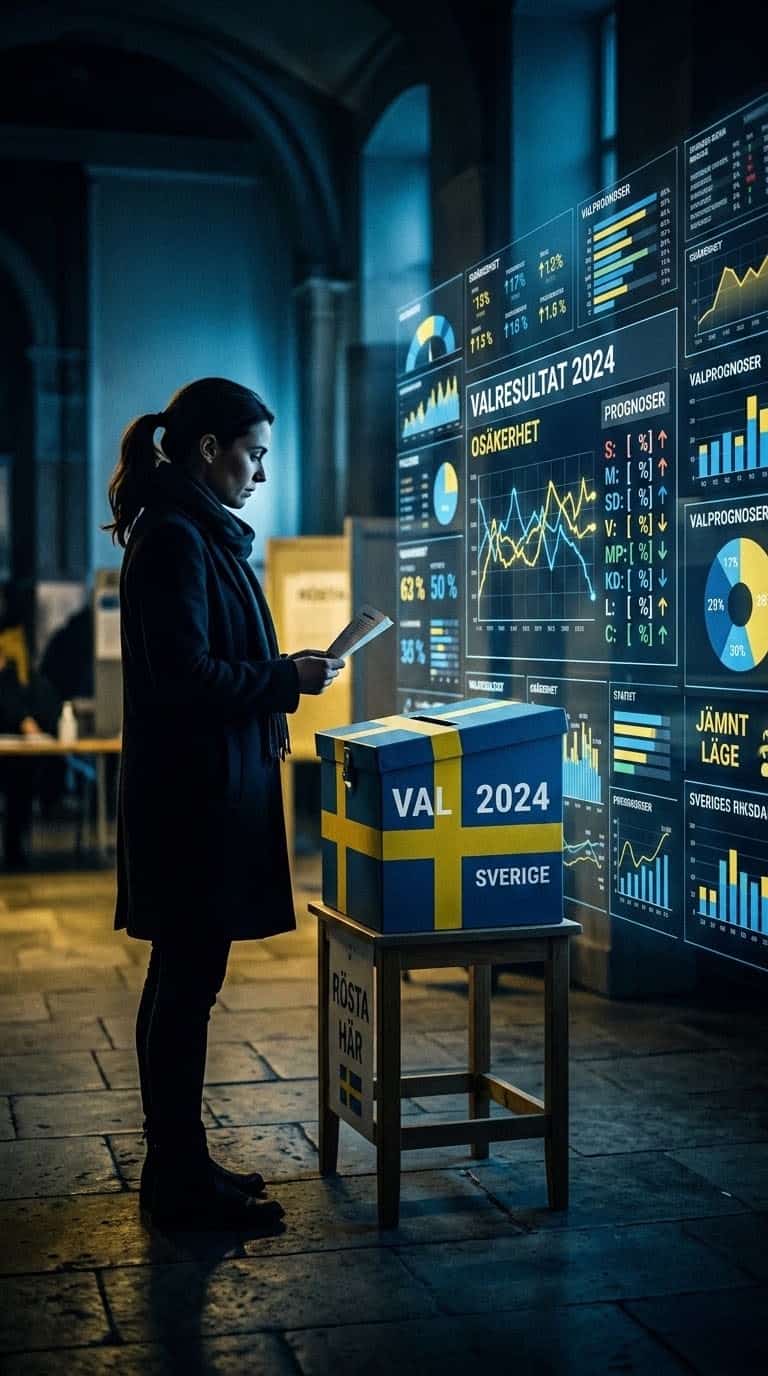
    Örebro, Sweden-You know the queue at a Swedish polling station. Long. Silent. Dutiful. For decades, voting wasn’t really a choice. It was a reflex. To be Swedish meant to vote.

    Now look at the places where the queues have disappeared. Concrete courtyards in “Million Program” suburbs.

    Quiet gravel driveways in the rural interior. A new kind of silence grows. The silence of the soffliggare-the “couch sitters.” But they aren’t lazy. They’re protesting.

    Democratic exclusion.

    They call this demokratiskt utanförskap(Democratic exclusion). Not apathy. An active rejection of a system that many feel has already rejected them.

    Fresh numbers from Statistics Sweden confirm the trend. In the 2022 election, turnout dropped to 84 percent. High by global standards. But a warning bell for Sweden. In some “vulnerable areas,” barely half of adults voted.

    Who are the ones staying home? We present three of them.

    The Numbers Tell The Story

    The drop isn’t random. It follows a pattern.

    Statistics Sweden shows the gap between people born in Sweden and people born abroad is now over 20 percentage points. Among first-time voters, the steady rise in participation has stalled.

    The “trust gap” widens. People with low trust in others increasingly opt out of the political system entirely. Or drift toward anti-system voices.

    But for many, the choice is simply silence.

    The Climate Pessimist

    Linnéa(Not her real name), 22, student in Uppsala.

    Linnéa voted in 2022. Her first time. She marched for the climate. Believed the promises of a “green transition.”

    “I grew up hearing that Sweden was the moral superpower,” she says. Staring at her phone where news of another missed climate target flashes by.

    “But I watched the last government. Now this one. They change the logos. The factories keep pumping.”

    For Linnéa, political language has become a dead language.

    “They talk about ‘budget discipline’ and ‘security zones.’ I’m worried about whether I’ll have a planet to live on. Or a pension to retire to.

    They fight over tax cuts for people who already own boats. I don’t see a ballot paper.

    I see a permission slip for them to do nothing.”

    The ‘Problem’ to be Solved

    Amir (Not his real name) 41, taxi driver in Malmö.

    Amir came to Sweden fifteen years ago. Learned the language. Speaks arabic to his kids at home, but flawless Swedish to passengers and others in society. Built a life. Used to vote Social Democrat (S). Then Moderate (M). Now? Votes for nobody.

    “Turn on the TV,” Amir says. Gestures to the radio in his cab. “When they talk about people like me, what do they say? Gangs. ‘Integration debt.’ They talk about me like I’m a leak in a boat that needs plugging.”

    Amir feels no party speaks to him. Only about him.

    “I work sixty hours a week. My back hurts. I pay taxes. But in the Riksdag(Swedish parliament), I’m not a citizen. I’m a statistic in a debate about crime.

    Why would I vote for a system that only sees me as a threat?”

    The Abandoned Loyalist

    Bo (Not his real name) 68, retired forester in Värmland.

    Bo voted in every election since 1976. Center Party member for twenty years. Remembers when the local municipality had power. When decisions got made at the village hall.

    “It’s gone,” Bo says. Points at the closed medical center down the road. “Stockholm decides everything now. They put up wind turbines here to power their Teslas in the city. Then they close our maternity ward.”

    Bo sees the political class as a different species. Urban professionals who’ve never held a chainsaw. Never waited three hours for an ambulance.”

    They come here every four years,” he says. Pours strong coffee. “Wear a helmet. Take a picture at the sawmill. Then leave. I stopped voting because I realized my X doesn’t count.

    The map they use in Stockholm doesn’t even have my village on it.”

    The Government’s Answer: ‘Information Campaigns’

    The government is worried. For the 2026 election, they’re launching a massive “Get Out the Vote” campaign.

    Printing brochures in fifteen languages. Hiring “democracy ambassadors” to go into the suburbs. Running ads on TikTok for people like Linnéa.

    Critics say this misses the point. The problem isn’t that Linnéa, Amir, and Bo don’t know how to vote. It’s that they don’t see why they should vote.

    Back to the Two Pictures

    So back to the polling station.

    Old picture. The queue was a line of people who believed they were building a society together. The state was a tool they could use.

    New picture. The queue is shorter. The people left outside-the young idealist, the hardworking immigrant, the rural pensioner-have realized the tool is broken.

    The silence of the soffliggare asks a dangerous question for 2026.

    Is a democracy still a democracy if the people who need it most have stopped believing in it?

  • The Silent North

    The Silent North

    Rural Abandonment in Västerbotten.

    The Silent NorthRural Abandonment in Västerbotten

    Västerbotten, Sweden-You remember the old image of Northern Sweden. Busy forestry roads. Small sturdy villages. Every town had a police station. Every village had a school. The “folkhemmet”-the people’s home-stretched all the way to the Norwegian border.

    Now look at the interior today. Roads are quiet. Except for huge logging trucks hauling timber to the coast. The village center windows are dark. The police station is ninety minutes away. The maternity ward closed years ago.

    “Centralisering”

    They have a name for this shift. Centralisering (Centralization). An economy built on gathering people and services in coastal cities. Saves money. For decades, everyone called it inevitable. It made cities efficient. It left the interior empty.

    New analysis shows the result clearly. Västerbotten is now two different worlds. The booming coast. The dying interior.

    How did a region rich in timber, hydropower, and minerals become a desert of public services?

    The Numbers Tell The Story

    Statistics Sweden data paints a clear picture of this retreat.

    In 1970, the municipality of Åsele had over 5,000 residents. A functioning hub. Today? Fewer than 2,800. Same story in Sorsele. Dorotea. Malå.

    The coastal city of Umeå grows fast. Aiming for 200,000 people. Meanwhile, the interior shrinks. But the drain isn’t just people. It’s money.

    A WSP report shows that natural resources get pulled from the interior. But tax revenue lands elsewhere. Hydroelectric dams in the north produce a huge share of Sweden’s electricity. Yet the property tax from those dams goes mostly to the state in Stockholm. Not to local communities.

    Simple version. The interior provides the engine’s fuel. The coast gets the mileage.

    A Tale of Two Västerbottens

    This isn’t just geography. It’s survival.

    Meet Erik (Not his real name). Thirty-eight years old. Urban planner in Umeå. Designs “smart city” zones. His kids go to a school five minutes from home. He breaks a leg? The university hospital is a short bus ride away.”

    Density creates innovation,” Erik says. “It’s expensive to keep pipes and roads working for three houses in the forest. People need to move where jobs are. It’s sustainable.”

    Now meet Berit(Not his real name). Seventy-two years old. Lives outside Sorsele. Runs a small “service point.” A shop that also acts as pharmacy, post office, and Systembolaget agent. Last winter, power lines fell under heavy snow. Her village waited three days for help.”

    They want the iron, the wood, the wind power,” Berit says. “But they don’t want the people who live here. When I call an ambulance, I count hours. Not minutes. We’re on our own.”

    Erik and Berit live in the same county. But they live in different centuries of service. Erik lives in a modern welfare state. Berit lives on a frontier outpost.

    The Government’s Answer: ‘The Green Transition’

    The government sees a bright future. Calls it the “Green Industrial Transition.”

    Billions of kronor pour into Northern Sweden. Green steel factories. Battery plants. The promise is that this “new industrialization” will save the North.

    Critics look at the map. The factories sit on the coast. Skellefteå. Luleå. Boden.

    For the interior, the “transition” looks different. More wind farms. More mines. Those need temporary workers, not families.

    The government offers “digital solutions” to replace physical clinics. A doctor on an iPad instead of a doctor in the village.

    Berit knows something. An iPad cannot set a broken bone. Cannot plow a road. The investment helps the GDP. It doesn’t keep the village school open.

    The Public Feeling

    People in the interior feel this abandonment. The SOM Institute at the University of Gothenburg tracks trust in society.

    Their surveys consistently show a “trust gap.” Satisfaction with democracy and public services runs much lower in the rural north than in the urban south.

    A majority of residents in these “shadow municipalities” feel national politicians don’t understand their reality.

    Visceral feeling. You hear it at the local gas station. People see their rivers generating power for the south. Meanwhile, they pay some of the highest municipal taxes in the country. Just to keep snowplows running.

    Back to the Two Pictures

    So back to two pictures of the North.

    Old picture. The whole country was meant to be lived in. The land’s resources supported the people on the land.

    New picture. The North is a resource colony. A place to extract energy and materials. To support green cities on the coast.

    The retreating services ask a simple question. Is the interior of Sweden for living? Or just for taking?

    Snow falls in Sorsele. The silence gets louder.

  • The Farmers’ Revolt: A View from the Tractor

    The Farmers’ Revolt: A View from the Tractor

    We followed for a week the happenings with agricultural unions in France. Their demands aren’t what mainstream media reports.

    Montauban, France-You know the postcard version of French farming. A wine bottle. A wheel of cheese. A sunlit village frozen in 1950. A lifestyle brand.

    Now step inside the cabin of a Fendt tractor parked on the A13 motorway outside Paris. The air smells like burned tires and diesel. The driver isn’t watching the sunset. He’s staring at a bankruptcy notice on his phone. Sleeping in his cab. Eating cold sandwiches. Riot police watch from the overpass.

    They call this la fracture agricole. The agricultural fracture. The sound of a social contract breaking.

    For decades, France promised its farmers protection. In exchange, farmers gave the country food security. Now farmers feel they’re being sold off. To make room for imported beef. For electric cars.

    New data shows the quiet collapse behind the loud protests. France is losing farms at a rate that would be a national scandal in any other business.

    Why do the people who feed Europe believe Europe wants them dead?

    The Numbers Tell The Story

    News cameras focused on burning hay bales. But the real story lived in spreadsheets.

    French Ministry of Agriculture and union data say France loses about 10,000 farms every year. That’s 27 farms disappearing daily.

    The government says inflation stabilized at 0.8 percent. For farmers, the math looks different. Input costs – machinery, energy, compliance – shot up. But the prices they can charge? Locked by supermarkets and global competition.

    Then there’s the EU-Mercosur trade deal. Signed January 17, 2026, in Paraguay. Eliminates tariffs on 91 percent of goods. Brussels calls it a win for GDP. French farmers call it a death sentence. It opens the door to 99,000 tons of South American beef. Beef that doesn’t have to meet the strict environmental standards French farmers live under.

    Simple version. The French farmer runs a race in heavy boots. His competitors run barefoot.

    A Tale of Two Europes

    This isn’t just about subsidy checks. It’s about dignity.

    Meet Pierre(Not real name). Fifty-two years old. Cattle farmer in Tarn-et-Garonne. Affiliated with the Coordination Rurale. His hands are stained with grease and soil. Works seventy hours a week. Last year his net income fell below minimum wage.”

    The TV says we’re angry about diesel tax,” Pierre says. Voice flat. “It’s not the fuel. It’s the lie. They ban me from using certain fertilizers to ‘save the planet.’ Fine.

    Then they sign a deal to bring in meat from Brazil. Where they cut down rainforest to graze cows. They don’t want to save the planet. They just want to outsource pollution and buy cheaper food.”

    Now meet Sophie (Not real name). Thirty-five years old. Sustainability consultant in Paris. Buys organic. Supports the Green Deal. Believes French agriculture’s future is agri-tech and high-end exports.”

    We can’t support inefficient farms forever,” Sophie argues over an oat milk latte. “The transition is painful, yes. But we need a less carbon-intensive model. If we can import grain more efficiently, we should. France should focus on value, not volume.”

    Pierre and Sophie share the same country. But they live in different economies. Sophie’s world is post-industrial services. Pierre is trapped in a dying industrial reality.

    The Government’s Answer: ‘The Checkbook of Silence’

    The government’s response to the January 2026 blockade followed a classic playbook. Money. Delay.

    Prime Minister Sébastien Lecornu announced an emergency aid package. €300 million. A “pause” on water regulations. The mainstream media called it a victory. Blockades lifted.

    Farmers who have spoken called it hush money.

    “They give us a check to pay bank interest for one year,” Pierre says.”But they don’t change the rules of the game. The Mercosur deal is signed. Supermarkets still set the price. Next winter, the money is gone. The problem stays.”

    Unions argue the government treats symptoms. Lack of cash. Ignores the disease. Unfair competition.

    The Public Feeling

    You’d think the public would be angry. Tractors blocked roads. Delayed flights. Choked Paris.

    Polls show something else. An Odoxa survey from early January found over 80 percent of French people supported the movement.

    Solidarity of the gut. Powerful. The French public knows something. When farms disappear, something essential to the nation’s identity goes with them. They see farmers not as a nuisance. As the last defense against a standardized, globalized food system.

    Back to the Two Pictures

    So back to the tractor cabin.

    Old picture. The farmer was the steward of the land. Guardian of the terroir. The heart of France.

    New picture. The farmer is a variable in a global equation. An obstacle to a trade deal. A “carbon emitter” to be managed.

    The tractors left Paris. For now. But the engines are still warm. Farmers ask a question Brussels hasn’t answered.

    Do you want a Europe that grows its own food? Or a Europe that just imports it?

    The revolt wasn’t about diesel prices. It was about the price of existence.

  • Shadows Over the Baltic: The Infrastructure Crisis

    Shadows Over the Baltic: The Infrastructure Crisis

    While everyone stares, the north’s energy networks are quietly falling apart. Aging tech. Geopolitical tension. Bad mix.

    Visby, Gotland – Think about the Baltic Sea ten years back. People called it a “Sea of Peace.” A busy ferry highway. A quiet garden for wind farms.

    The cables on the seabed were boring. Just wires. They carried emails, money, electricity. Nobody gave them a second thought.

    Now look at the Baltic today. A grey zone. “Dark ships” drift through the fog. Tankers with their transponders switched off.

    The seabed has turned into a crime scene. Frigates patrol the horizon like sheepdogs. Those cables aren’t just wires anymore. They’re the most fragile arteries of the West.

    They have a name for this shift. Hybridkrigföring. Hybrid warfare. A war with no declaration. Fought with anchors, not missiles.

    New intelligence reveals a grim pattern. The world watches wars in the south. Meanwhile, the north quietly breaks.

    Since 2022, over a dozen critical cables and pipelines have been cut. The infrastructure that keeps lights on in Sweden, Finland, and the Baltics is under attack.

    How did the world’s most stable region become its most vulnerable flank?

    The Numbers Tell The Story

    The Swedish Defence Research Agency and NATO put out numbers. Alarming.

    In late 2025 alone, the “Shadow Fleet” – aging tankers Russia uses to bypass sanctions – was linked to several cable severing incidents.

    On Christmas Day 2025, the Eagle S dragged its anchor for miles. Cut the Estlink 2 power cable. Knocked out data connections.

    But sabotage isn’t the only problem. Age is just as bad. Svenska Kraftnät says huge chunks of the Swedish grid are past their technical expiration date. Built for a different era.

    Put those two facts together. A perfect storm. Old hardware. New enemies. A DNV report states that 65 percent of energy executives now see cyber threats and physical sabotage as their biggest risk.

    Simple version. The hardware is rotting. And someone is waiting to cut whatever threads remain.

    The Watcher and The Witness

    This isn’t just military chess. It hits real people on the coast.

    Meet Commander Lars (Not real name)

    . He works at the newly expanded NATO monitoring center. Spends his days staring at AIS data. The tracking signals of ships.

    “It used to be about search and rescue,” Lars says. “Now it’s cat and mouse. We see a ship slow down. It goes dark. We send a drone.

    By the time we get there, the cable is gone. They claim it was an accident. An anchor ‘slipped.’ You can’t arrest a captain for bad luck. Even if it happens five times.”

    Lives on Gotland’s eastern coast. Runs a small server farm for local businesses. When the fiber optic cable to the mainland got damaged in January, her business went dark for two full days.

    “We always looked east with worry,” Elina says. Staring at grey water. “But we thought soldiers would land on the beach.

    We didn’t think they’d just turn us off from the bottom of the sea. I bought a diesel generator last week. In 2026. In Sweden. Feels absurd.”

    Lars fights the war on a screen. Elina pays for it in silence.

    The Government’s Answer: ‘Baltic Sentry’

    Brussels and Stockholm launched “Baltic Sentry.” January 2026. A NATO operation. Naval drones. Surveillance aircraft. Frigates. All meant to “harden” the sea. Sweden promised billions to modernize the grid and bury more cables.

    Critics call it security theater.

    You can’t guard every inch of a 1.3 million kilometer network. A drone can watch a ship. It can’t stop an anchor from dropping in a storm. And the legal tools are weak. “Freedom of Navigation” laws let shadow ships sail right over critical assets.

    Building a high-tech fence around a house with no locks on the doors.

    The Public Feeling

    Mood around the Baltic rim is shifting. From complacency to vigilance.

    A Swedish Civil Contingencies Agency survey shows “fear of infrastructure collapse” has climbed into the top three concerns for households. Right up there with healthcare and crime.

    People are prepping. Sales of “crisis boxes” – radios, water cans, camping stoves – have spiked. The prepping movement used to be for the paranoid. Now it’s mainstream.

    Back to the Two Pictures

    So back to the sea.

    Old picture. The Baltic was a bridge. Connected East and West. Bound economies together with steel and fiber.

    New picture. The Baltic is a moat. Dark. Cold. Full of hidden sharp edges.

    The Shadow Fleet keeps sailing. The question for 2026 is simple.

    Can a modern society survive when its lifelines lie exposed on the muddy floor of a hostile sea?

  • Malmö’s New Social Contract

    Malmö’s New Social Contract

    Beyond the Headlines of Gang Violence

    Malmö, Sweden – You know Malmö from news headlines. “No-go zones.” Explosions. Police overwhelmed by gang wars. Politicians across Europe use it as a warning. A city defined by broken things.

    Now look at the Malmö that’s quietly taking shape today.

    Police officers sit in living rooms with gang members’ mothers. Not to arrest them. To warn. To offer a way out. Social workers and housing companies share data. They stop evictions before they happen. A city trying to build trust where trust ran out years ago.

    They call this shift Sluta skjut (Stop Shooting). The broader name is Group Violence Intervention. The idea sounds strange. To stop violence, you treat the perpetrators not just as criminals. As rational people. People you can reason with. People you can help.

    New numbers from 2025 suggest it works. Shootings dropped more than 50 percent compared to the worst years. But the quiet on the streets hides other noise. Malmö is rewriting its social contract. Not everyone gets a seat at the table.

    How does a city famous for its fractures try to heal itself while the gap between rich and poor just keeps growing?

    The Numbers Tell The Story

    Brå, the Swedish National Council for Crime Prevention, and Malmö University put out data. The picture is complicated.

    Sluta skjut worked. Shootings per month fell after full implementation. The “custom notifications”-meetings between police, community leaders, and gang members-made a real difference.

    But the Segregation Barometer, shows something else. Malmö is still deeply split. About 28 percent of people live in areas with “socioeconomic challenges.”

    Violence went down. But the inequality index stayed high at 54. That means more than half of low-income residents would have to move to a different neighborhood just to spread wealth evenly.

    Simple version. The bullets stopped flying. But the walls between neighborhoods are still tall.

    The ‘Stop Shooting’ Paradox

    This isn’t just police work. It’s about second chances.

    Meet Hassan (Not real name).They gave him a choice. “The violence stops now. If it doesn’t, we come for your whole group. If the violence does stop, we will help you.”

    Hassan took the help. Today he works in logistics.”

    They didn’t just threaten me,” he says. “They gave me a phone number that actually worked. I got a job. Not just a lecture.”

    Now meet Elin(Not real name). Fifty-five years old. Single mother in Limhamn, a wealthier part of Malmö. Worked as an administrator for thirty years. Her rent just went up 12 percent after a renovation she never asked for. She’s part of the new housing precariat.

    “I see millions going into projects for the gangs,” Elin says. “I see job programs and support. But I’m drowning in rent. There’s no special project for me. I followed all the rules. And I feel like I’m getting pushed out of my own city.”

    Hassan and Elin live in the same city. Hassan got targeted mercy.Elin got an indifferent market.

    The Government’s 2026 Answer: ‘The Strict & The Supportive’

    City leaders call it the Malmö Model. Hard boundaries. Soft hands.

    For 2026, the strategy expands. GVI now applies not just to gangs but to domestic violence. They call it Trygg Relation. The city also pushes a Climate City Contract. Wants Malmö to become a green leader.

    “Renovictions”

    Critics see a blind spot. Focus is on extremes. Violent criminals. Green elite. The middle gets left in the gap. People like Elin struggling with housing. Immigrant families who aren’t criminals but can’t find steady work.

    The housing market runs on “renovictions.” Eviction by renovation. Pushes lower-income families further out. Creates new pockets of exclusion even as old ones get “fixed.”

    The Public Feeling

    People in Malmö feel the change. But they’re wary.

    Trust surveys show a split. In neighborhoods targeted by Sluta skjut, trust in police actually rose. People feel safer walking at night.

    But in the broader working class? A sense of unfairness creeps in. A trust gap opens. Not between rich and poor. Between people the system sees as problems to solve and people it barely notices.

    Back to the Two Pictures

    So back to two pictures of Malmö.

    Old picture. The welfare state was a blanket. Covered everyone equally. But too thin to stop gang violence’s sharp edges.

    New picture. The welfare state is a laser. Targets the most dangerous problems with precision and resources. But a laser leaves the rest of the room dark.

    Sluta skjut worked. But it asks a hard question. Can you build a safe city by focusing only on the shooters while the housing market quietly pushes out the neighbors?

    The sirens are quieter in Malmö tonight. But the silence carries questions nobody answers.

  • Digital Nomads or Digital Refugees?

    Digital Nomads or Digital Refugees?

    Lisbon’s housing market is breaking. Locals fight back with laws and spray paint.

    Lisbon, Portugal – Think of Alfama ten years ago. A maze of shouting neighbors. Laundry hanging out windows.Grilled sardines smell. Loud. Crumbling.

    Undeniably Portuguese. You lived there because your grandmother did.Now picture Alfama today. Laundry still hangs. But often it’s just a prop for Instagram.

    Shouting got replaced by laptop clicks. Specialty coffee shops. Crumbling facades got smoothed over with white paint and smart locks.

    Gentrificação Turística.

    They have a name for this shift. Gentrificação Turística. Tourist gentrification. An economy built on selling a city’s vibe to people who don’t have to work in its local economy.

    New data from early 2026 confirms what every local feels. Lisbon is now more expensive than Madrid.

    But its wages match Eastern Europe. The city became a premium product its own citizens can’t afford.

    How did Western Europe’s poorest capital turn into the most expensive playground for the global mobile class?

    The Numbers Tell The Story

    The math for Lisbon in 2026 is brutal.Idealista and National Statistics say the average net salary hovers around €1,273 per month.

    Meanwhile, average rent for a one-bedroom in the city center passed €1,600.Simple math. Average worker would need 125 percent of their income just for rent.

    The “Mais Habitação” laws from previous years tried to stop this. Limited new Airbnb licenses.

    But damage was already done. Price-to-income ratio hit 21.1. One of the highest in the world. Investropa report says a typical family now needs over 20 years of total salary to buy a home.

    The Nomad and The Neighbor

    This isn’t just economics. It’s about neighborhood soul.Meet Juma(Not real name). Twenty-nine years old. Software developer from Nairobi, Kenya. Part of the new wave of global citizens. Earns a US salary. Lives in Lisbon’s sun.

    He sits in a cafe in Graça typing code.”I love the energy here,” Juma says. Sips a €5 flat white. “It’s peaceful. Maisha marefu, you know? In Nairobi, the hustle is hard. Here I can breathe. I know locals are angry, but I contribute. I spend money here.”

    Juma represents the dream. Freedom of movement. He speaks Kiswahili to friends on Zoom. Discusses where next. Maybe Bali. Maybe Mexico.

    Now meet Maria (Not real name). Sixty-four years old. Lived in Graça her whole life. Last month her landlord sent an eviction notice.

    Landlord is an investment fund based in Delaware. They want to renovate the building for luxury short-term stays.”They speak languages I don’t understand,” Maria says.

    Gestures to the cafe where Juma sits. “They eat brunch while I count cents for bread.

    I’m not living in Lisbon anymore. I’m living in the scenery of their vacation.”

    Juma sees paradise. Maria sees a cage. Juma brings his pesa and his laptop.

    Maria has only memories and a pension that hasn’t changed in a decade.

    The Government’s Answer: ‘The Broken Tax Haven’

    For years, Portugal courted people like Juma. NHR tax scheme. Flat 20 percent rate. Worked too well. The government tried to pivot. NHR is gone for new entrants. Replaced by stricter “IFICI” regime for scientific research. But market didn’t cool.

    Demand from wealthy foreigners is infinite. Americans. Kenyans. Germans.Asians. Supply of houses is finite.The “Casa para Viver” movement says the government is addicted to foreign capital.

    They fix the tax code. But they don’t build social housing. Promised 33,000 new public homes by 2030. In 2025, only 900 got finished in Lisbon.

    The Public Feeling

    Anger is written on walls.Walk through Mouraria or Arroios. You’ll see graffiti. “Alojamento Local = Morte Local.” Local accommodation equals local death. “Nomads Go Home.”

    Expresso survey found 80 percent of Lisboetas feel the city prioritizes tourists over residents.

    Sentiment shifts from hospitality to hostility. The warm Portuguese welcome is cooling down.Locals feel like extras in a movie directed by real estate funds.

    Back to the Two Pictures

    So back to the view from the Miradouro.

    Old picture. Lisbon was a city of stone and salt. Owned by people who endured its hardships.

    New picture. Lisbon is a subscription service. Pay your monthly fee. Get sun and pastel de nata. Get bored? Unsubscribe and leave.Juma packs his laptop. “Tutaonana baadaye,” he says to the barista. He might be here next year. Might not.

    Maria packs her boxes. Has to be out by Friday. She won’t be back.

    The tram rattles up the hill. Full of people. But none of them are going home.

  • The Alpine Shift: Climate Adaptation in Practice

    The Alpine Shift: Climate Adaptation in Practice

    The Alpine Shift: Climate Adaptation in Practice. How Swiss mountain villages are trading skis for yoga mats.

    Langenbruck, Switzerland –You know that Swiss winter postcard. White silence. Ski lift gears clanking. Fondue smell.

    For a hundred years, that was the deal. Snow fell. Tourists came. Villages did well.Now look at the lower foothills of the Jura or the Prealps.

    Hills are brown and green. The T-bar lift sits silent. Cables rusting in January rain. Only sound is wind moving through pine trees.

    Trees that are thirsty.They have a name for this shift. Hitzestress-Flucht. Heat stress escape.Winter economy is dying.

    Cool-cation anyone?

    But a new summer economy is being born. Tourists aren’t coming for ski thrills anymore. They’re coming for the cool-cation.

    Fleeing southern Europe’s brutal heat. Looking for high-altitude chill.New data from January 2026 backs it up. Traditional ski visits at low-altitude resorts have collapsed. But summer overnight stays in the Alps? Up 4.1 percent.

    Switzerland is swapping skis for yoga mats.How does a country built on winter survive when the snow goes away?

    The Numbers Tell The Story.

    There’s this thing called the “Snow Reliability Line.” Most watched stat in the country.

    Swiss Federal Institute for Forest, Snow and Landscape Research says the reliable snow line has crept above 1,500 meters. Villages below that? Business model is broken.Switzerland had 545 ski locations.

    Nearly 40 percent have either closed or sit inactive.The government’s “Innotour” program shifted millions of francs.

    Away from snow cannons. Toward four-season infrastructure. Mountain bike trails. Forest bathing platforms.Simple truth. The Alps aren’t a winter sports arena anymore. They’re becoming a summer climate refuge.

    A Tale of Two Mountains.

    This isn’t just weather changing. It’s identity.Meet Beat(not real name). Sixty-four years old. Ran the ski lift in a small village in Canton Solothurn for forty years.

    The lift hasn’t run a full week since 2023. He spends his days maintaining machines that may never spin again.”

    They talk about ‘transformation,’” Beat says. Greasing a gear that doesn’t need it. “But you can’t transform a culture overnight.

    My father taught me to ski on this hill. Now they want me to guide tourists to look at flowers? A mountain without snow is just a steep field.”

    High-tech wellness spot.

    Now meet Amani(not real name). Thirty-two years old. Wellness professional at a newly converted bio-resort in the Valais. The building used to be a ski lodge. Now it’s a high-tech wellness spot.

    Amani is part of the new global workforce of the Alps. He walks through the lobby with a tablet.

    Speaks softly into his headset in Kiswahili to a potential client in Nairobi,Kenya, looking to escape equatorial heat.“Karibu sana, hali ya hewa hapa ni nzuri. Welcome, the weather here is beautiful. He smiles. “

    We offer clean air, silence, and temperatures that let you sleep.”To Beat, the mountain is a place of action that got paused.

    To Amani, the mountain is a product-Alpine freshness. More valuable than ever in a warming world.

    The Government’s Answer: ‘Managed Retreat’.

    Swiss government is pragmatic. They’re managing a retreat from lower elevations.

    Through the Adapt+ program and Innotour, they subsidize dismantling old ski infrastructure. Pay villages to remove rusting pylons. Rewild the slopes.Critics call it a “rich man’s transition.”

    “Rich man’s transition”

    Wealthy resorts like St. Moritz and Zermatt have altitude and money. They can build higher lifts. Make snow.

    Smaller villages that made skiing accessible to working class? They’re told to become hiking hubs or die.Result?

    Gentrification of winter.

    Skiing becomes luxury for the elite. Masses get wellness walks in the mud.The Public feeling mood in the valleys is mixed.

    Grief and relief.Swiss Tourism Federation surveys show locals mourn losing the “Ski Week” tradition. But there’s growing acceptance.

    The fear of empty beds is shifting to fear of over-tourism in summer.Places like Lauterbrunnen are putting up gates to control summer crowds. Winter silence is gone. Replaced by year-round traffic noise.

    Back to the two pictures.So back to the village square.

    Old picture-Village quiet in July. Bursting with life in January. Lived by the rhythm of seasons.

    New picture-Seasons blurred. Village is a climate shelter. Busy when the world is hot. Quiet when the world is gray.Beat looks at the forecast. Rain. Again.

    While, Amani looks at his bookings. Full.The Alps are shifting.

    Question for 2026 isn’t whether snow will come back.It’s whether the people who live there can recognize their home without it.