How a promise to keep one party out became Europe’s biggest democratic dilemma
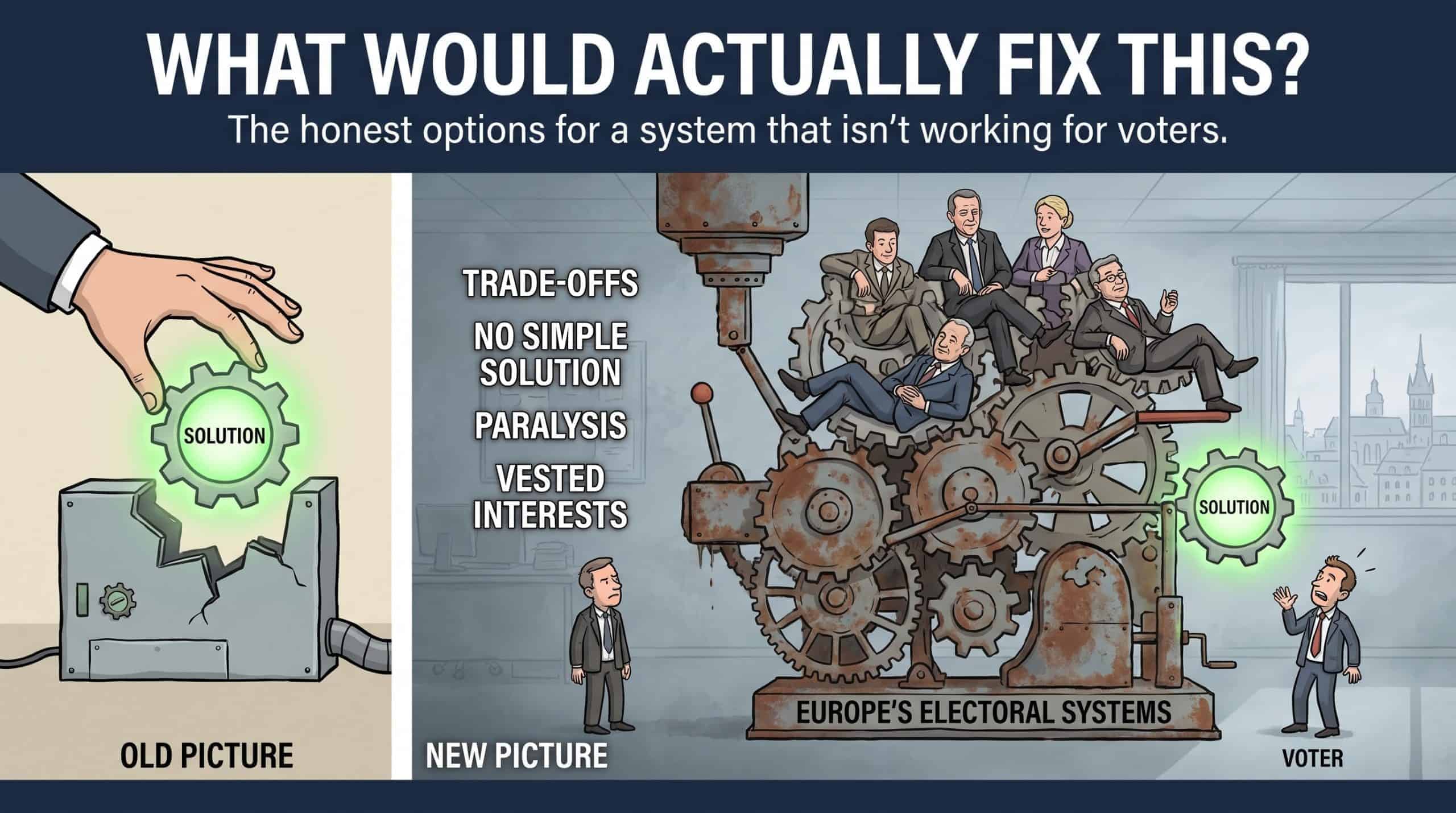
Berlin, Germany – Think of the old picture of democracy. Voters choose. The parties with the most votes negotiate. Everyone who won seats gets a fair shot at power. The system is open. The doors are unlocked.
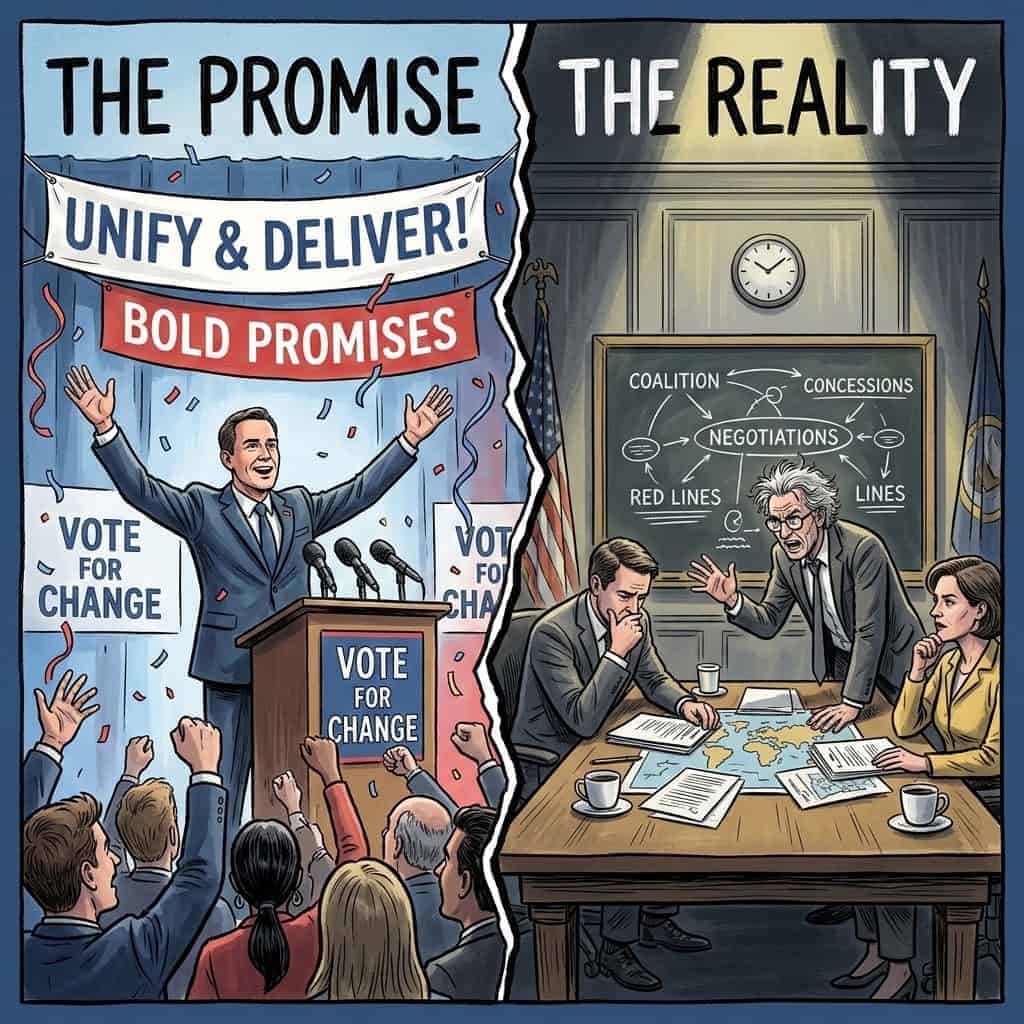
Now picture the new picture. Voters choose. One party wins millions of votes. It gets seats in parliament. It has a mandate from its voters. And then every other party says the same thing: we will never work with you.
Not because you broke the law. Not because you are incompetent. Because we decided, before you even arrived, that you are not allowed in. There are reasons given.
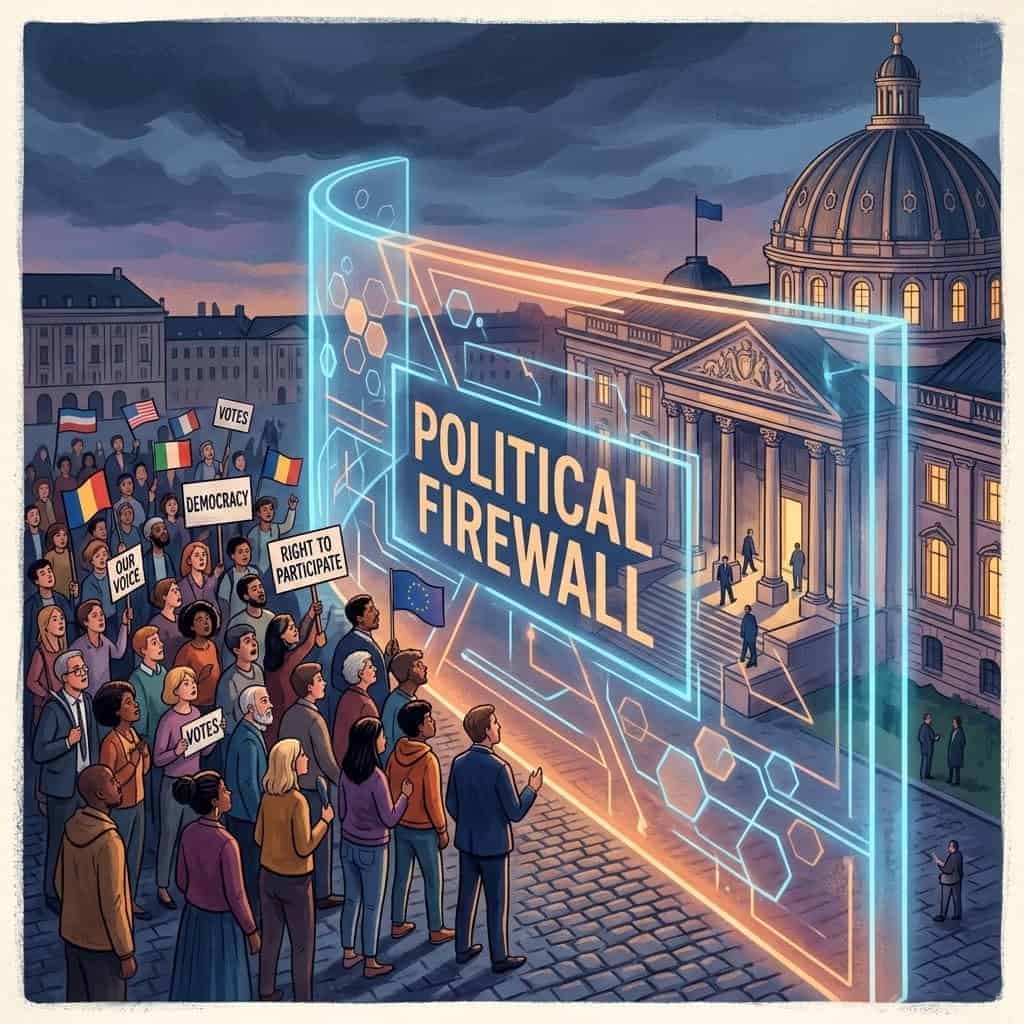
This is the firewall. The cordon sanitaire. The republican front. Different names, same idea. And it has become the single most explosive question in European democracy.
The old picture, in history
For most of the twentieth century, the firewall was not a thing. Parties competed. Deals were made. If you won seats, you had a seat at the table. Even communists and fascists were sometimes tolerated in coalitions, if the math demanded it.
After World War II, Europe made a choice. Never again. In Germany, the lesson of Weimar was that mainstream parties had helped the Nazis into power by treating them as normal. So the new republic built a firewall. The far right would be isolated. Ignored. Denied legitimacy.
For decades, it worked. Germany had stable governments. France had its “republican front” – a coalition of everyone against the National Front. Sweden had its own version: no party would touch the Sweden Democrats SD.
The firewall was not a law. It was a norm. A promise. A line in the sand.
The new picture, in numbers
Then the voters started crossing the line.
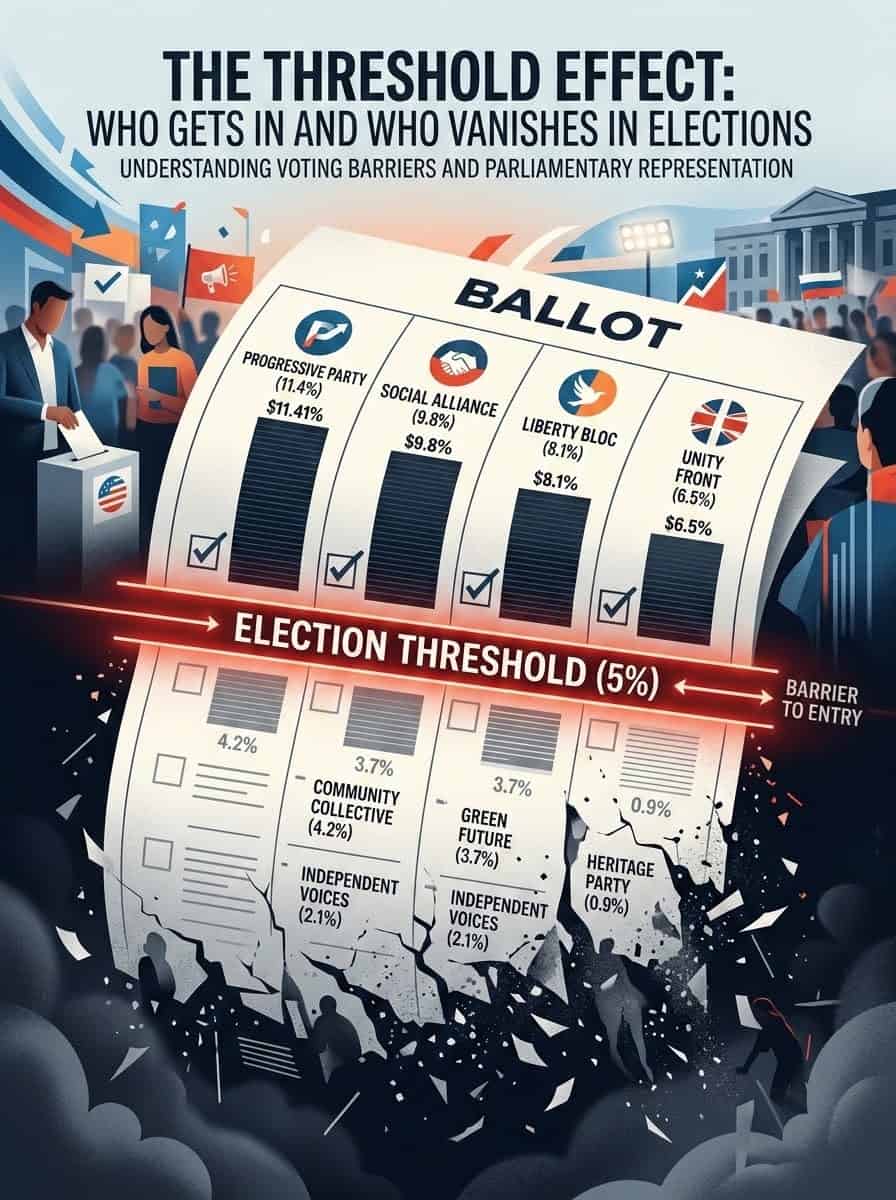
In Sweden, the Sweden Democrats went from 5.7 percent in 2010 to 17.5 percent in 2018 to 20.5 percent in 2022 . They became the second-largest party. The firewall held in 2018. It broke in 2022.
In Germany, the Alternative for Germany went from 4.7 percent in 2013 to 12.6 percent in 2017 to 20.8 percent in 2025 . Every other party said they would never work with them. The firewall held. But AfD voters got nothing.
In France, the National Rally went from 13.2 percent in 2012 to 33.9 percent in 2024’s first round . The republican front – the alliance of everyone against the far right – held. RN got 125 seats. The left won the most seats. Macron refused to let them govern. The firewall worked. Everyone was furious.
In the Netherlands, Geert Wilders’ Party for Freedom won the most seats in 2023. He spent months trying to find partners. He finally assembled a coalition. Then he walked away. The government collapsed in 337 days . In 2025, his party tied for first place and was excluded again.
The firewall holds: Germany
Germany is the clearest case of the firewall holding – and the clearest case of what it costs.
In February 2025, the AfD won 20.8 percent of the vote. Second place. The party that the domestic intelligence service has classified as “right-wing extremist” was the second-most popular party in the country .
Every other party refused to work with it. The conservatives, who won first place with 28.6 percent, formed a grand coalition with the Social Democrats – the party that had just suffered its worst defeat in decades.
The AfD got zero influence over the government it had helped to shape by taking votes from everyone else.
Then came Saxony-Anhalt in September 2026. The AfD won 43.8 percent of the vote. A landslide. The party’s leader, Ulrich Siegmund, declared a “clear mandate to govern” . He was three seats short of a majority. He reached out to other parties.
Every other party said no. The CDU, which had won the state for decades, saw its vote nearly halved. Its leader said the result was “seismic” . But even in defeat, the CDU refused to work with the AfD.
Siegmund was furious. “You cannot say I do not accept the vote of the people,” he said . AfD’s deputy leader, Beatrix von Storch, said the result meant “democrats have to talk to one another. This is what democracy demands” .
The firewall held. The AfD got nothing. Millions of voters got nothing.
The firewall breaks: Sweden
Sweden is the clearest case of the firewall breaking – and the clearest case of what that costs.
For years, the Moderates, Christian Democrats, and Liberals all said the same thing: we will never work with the Sweden Democrats. The SD was founded in the 1980s with links to the militant right. It was a pariah. It was not invited to debates. It was not treated as legitimate.
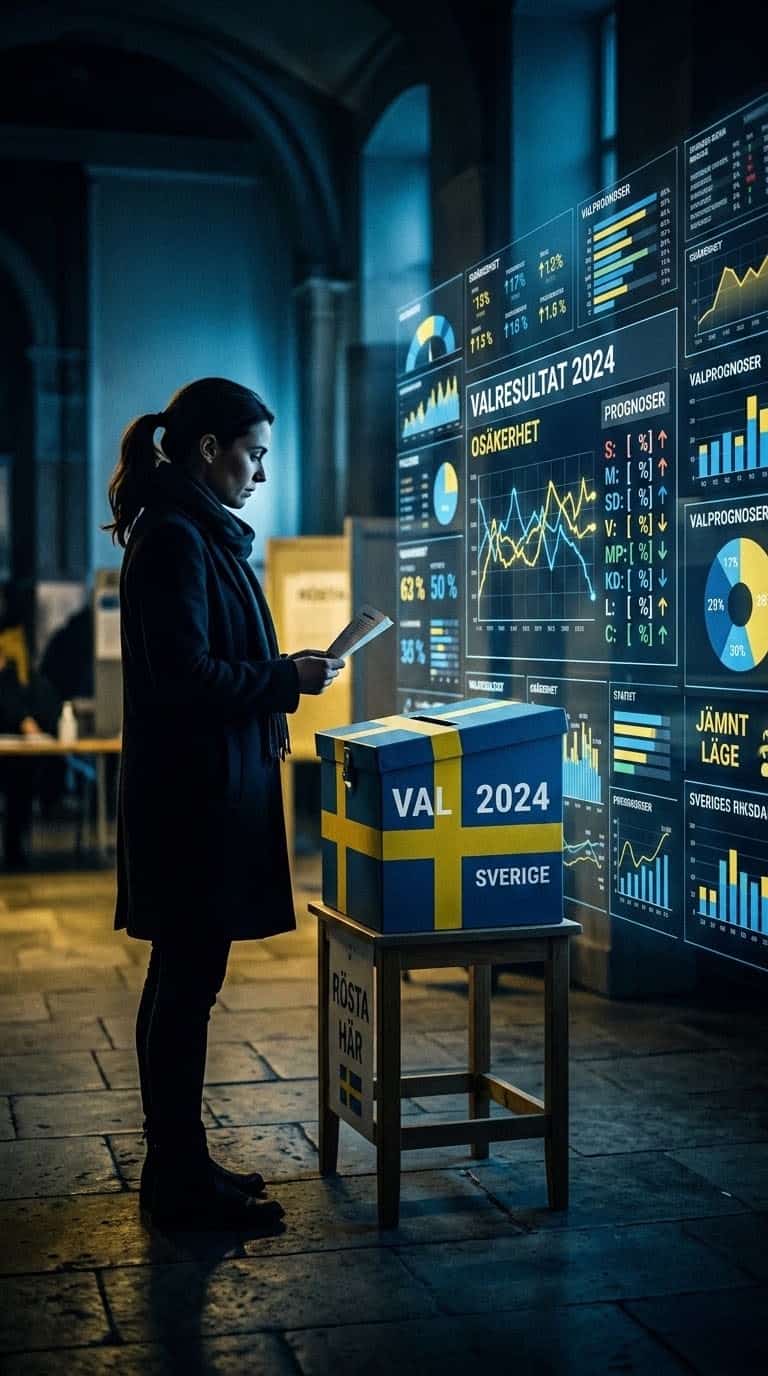
Then came 2022. The right bloc won 176 seats to the left bloc’s 173. Three seats. That was the margin . The Moderates needed the SD to govern. They had a choice: break the firewall, or let the left govern.
They broke it. On 14 October 2022, they signed the Tidö Agreement with the Sweden Democrats. The SD would support the government from the second row. It would get formal influence over immigration, crime, and other policy areas. It would not get cabinet seats – that was the fig leaf – but it would get power .
The Moderates got the prime minister’s office. The SD got the policy. And the voters who had been told “never” got a government that depended on the party they had been promised would never be allowed in.
What happened next
Four years later, the SD is not weaker. It is stronger.
Jimmie Åkesson, the SD leader, is allegedly demanding half of all ministerial posts in the next government, including three of the four most important portfolios and the Migration Ministry. The coalition partners have promised him negotiations. By 2030, he wants to be prime minister .
Normalising the norm?
The firewall did not contain him. It normalised him. Experts call this “normalisation” – the process by which a party that was once considered beyond the reach becomes just another player .
The old picture, in a voter’s voice
Meet Karin (not real name). She is 58. She lives in a small town in central Sweden. She voted for the Christian Democrats in 2022.
“I trusted them,” she says. “They said they would never work with the Sweden Democrats. I believed them. I voted for them because I wanted a centre-right government that was decent. And then they signed a deal with the SD. I felt tricked. I felt stupid. I felt like they had lied to my face.”
She is not alone. In the 2026 campaign, the Christian Democrats are trying to reach out to the Social Democrats – offering cooperation on healthcare, on energy. But voters like Karin remember. “I will not vote for them again,” she says. “They showed me who they are.”
The new picture, in another voice
Meet Anders (not real name). He is 41. He lives in Stockholm. He voted for the Moderates in 2022.
“I knew what I was getting,” he says. “I voted for the Moderates because I wanted a centre-right government. I knew the SD would be involved. They told us they would not govern with them, but they also told us they would not let the left govern.
I understood the trade-off. I do not feel tricked. I feel like I made a choice.”
He pauses. “But I understand why people are angry. The system is not honest. It asks you to vote for one thing and then it delivers another. That is not a lie exactly. But it is not the truth either.”
The honest question
The firewall is a response to something real. The AfD, the SD, the RN – these parties have roots in extremism. They have members who say things that should not be said. They represent a threat to the liberal order that many Europeans value.
But the firewall also does something else. It tells millions of voters that their choice is not legitimate. Not because they are wrong. Because the other parties have decided they are not allowed.
In Germany, 20.8 percent of voters chose a party that is locked out of power . In Sweden, the firewall broke, and the SD got influence without responsibility. In France, the republican front held, and the RN got seats without power . In the Netherlands, the firewall held again in 2025, and Wilders was excluded once more .
Back to the two pictures
So we return to our two pictures of democracy.
In the old picture, every party that wins seats gets a fair shot at power. The system is open. The doors are unlocked. Voters decide who gets in.
In the new picture, the doors have guards. Some parties are not allowed in. The guards are the other parties. They are not elected to be guards. They just decided to be. And the voters who chose the parties outside the door are told their choice does not count.
The firewall is not a conspiracy. It is a public promise. It is debated. It is defended. It is attacked. But it is also a decision that millions of voters are not represented in government – not because they are wrong, but because the other parties have decided they are not allowed.
The question in 2026 September 13th:
The question is not whether the firewall is well-intentioned.
The question is whether a democracy can lock out 20 percent of its voters and still call itself one.
Other articles in the series: Is ballot democracy still democracy?
When the voters cast their ballots however, it’s the seats and blocs that count in parliament…Not forgetting closed door negotiations for government formation, and a PM whom in some cases ended up being an unelected civil servant.
All articles in the series including the editorial explain the pertinent questions like the why and how’s and present a solution to the question of democracy through electoral voting in some European nations.
Hope you find them of any help… and that would make us at EuroContinentalDispatch.com(The voice of the unheard majority on the European continent) glad!
https://eurocontinentaldispatch.com/articles/the-firewall-when-everyone-agrees-to-ignore-millions
https://eurocontinentaldispatch.com/articles/the-promise-they-broke
https://eurocontinentaldispatch.com/articles/the-4-the-5-and-the-votes-that-vanish
https://eurocontinentaldispatch.com/articles/what-would-actually-fix-this
https://eurocontinentaldispatch.com/articles/sweden-votes-tomorrow-will-it-be-2022-all-over-again
https://eurocontinentaldispatch.com/articles/you-voted-someone-else-chose-how-europes-system-turns-your-ballot-into-a-starting-position
https://eurocontinentaldispatch.com/articles/the-quiet-robbery-why-your-vote-keeps-losing-to-the-fine-print