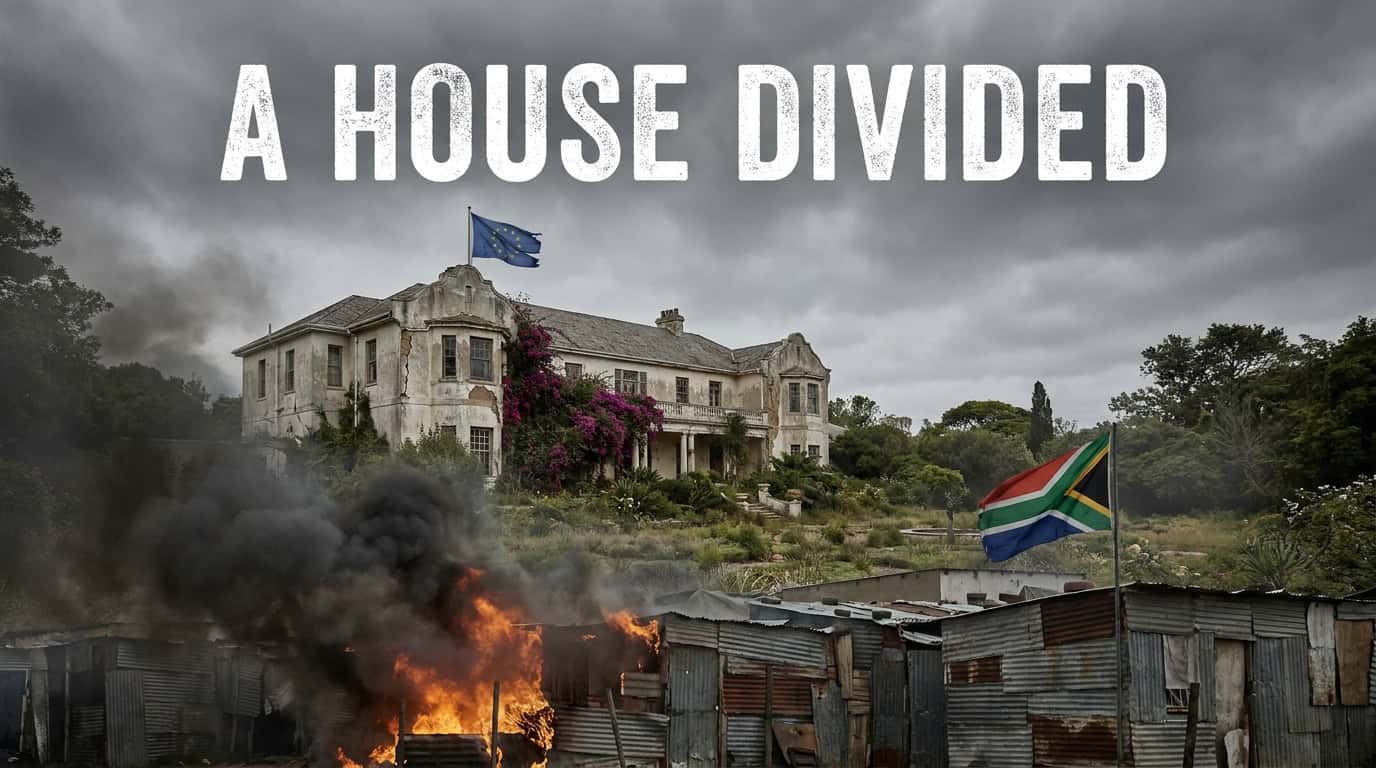
Author: Christine Afandi A.

  • The House That History Built: Why South Africa’s Burning Streets Are Our Shared Business in North And West Europe 

    The House That History Built: Why South Africa’s Burning Streets Are Our Shared Business in North And West Europe 

    Let me tell you about the house that history built. About South Africa, the current crisis and Peter Abrahams and Nadine Gordimer.

    Two of many writers whose work that I read many years ago reminds me of the currently resurfaced turmoil in South Africa that Europe pretends not to see!

    ‘It must be a hard thing to be a man in the city’ echoes as one of the themes (if not major  theme) in Peter Abraham’s novel The Mine Boy published in 1946.He was a brilliant writer. Born in 1919. In Vrededorp. 

    Today Abrahams would have observed ‘it must be a hard thing to be a ‘foreigner’; not just in a city in South Africa but in cities in Europe, USA and the world at large’.

    That’s the whole setup right there playing out in  2026.

    Peter Abrahams was a journalist. A novelist. A man who watched how the machine worked in apartheid South Africa era. It was not to build community. It was to extract profit.

    He saw the mines. The gold. The diamonds. All that wealth pulled from the South African ground. And he saw where it went-north. Across the Atlantic. To London. To Amsterdam e.t.c.

    The English. The Dutch. Their capital built those tunnels in South Africa. Their banks financed the digging. And the Black men? They were tools. Temporary. Useful until they broke. Then discarded.

    Abrahams understood something simple: The system wasn’t built for the community. It was built for extraction. I repeat, for profit!

    The book Mine Boy is about survival. I read it in a sitting. Re-read it several times after. It’s about young and not so young black mine workers(from indigenous South Africans and other neighbouring nations) finding each other in the city.

    Building solidarity. Keeping their humanity intact despite everything. It’s a portrait of resistance.

    Peter Abrahams had to leave eventually. But the blueprint stayed behind.

    Then there’s Nadine Gordimer.

    Born 1923. Springs, South Africa. Privileged. Middle-class. Jewish family.

    Gordimer could have looked away. Plenty did.

    Instead, she became the conscience of a nation. Wrote novels that cut through the lies. Challenged racism. The segregation. The whole rotten apparatchik in the then regime.

    The Swedish Academy gave her The Nobel prize in 1991. Said her work was “of very great benefit to humanity.” High praise. But she didn’t write for prizes. She wrote because silence felt like complicity.

    She knew what Peter Abrahams knew. Just from a different angle. Different skin. Different starting points.

    Same conclusion.

    In 1974, Gordimer published The Conservationist.

    It’s about a white industrialist named Mehring. Wealthy. Detached. Buys a farm in the Transvaal in South Africa. A tax hedge. A weekend escape.

    Then they find a body on his land. An unidentified black man. Buried carelessly. Left there.

    Mehring tries to ignore it. But the body keeps surfacing. Floods uncover it. The earth pushes it back up. Again and again. Nature won’t let it stay hidden.

    The land becomes a character in that book. For Mehring, it’s a commodity. Something to own. To manage. To conserve for profit.

    But the novel suggests something else. The land will reject his ownership. The spirit of the people buried in it-they will reclaim what was taken.

    Mehring is hollow inside. Alienated from his son. From his lover. From the black workers who actually understand the rhythms of the farm. He conserves his wealth. His status. His lifestyle. But he’s bankrupt where it matters.

    The buried body is a symbol. It represents the truth that apartheid tried to bury. The history it tried to erase. The humanity it tried to ignore.The truth keeps surfacing.

    Now look at the headlines.

    Migrants chased through townships. Shops set on fire. Nigerian owners. Zimbabwean owners. Their goods were stolen. Their livelihoods turned to ash.

    The pretext? Illegal immigrants.

    But watch closely. It’s not just about papers. Legal residents get caught up, too. Citizens from other African countries who’ve built lives here. Opened shops. Employed locals. Paid taxes.

    Doesn’t matter. They’re foreign. They’re different. They’re targets.

    Sound familiar?

    People fight over land. Over property. Over who belongs and who doesn’t. They grab what others built. What others paid for. What others created from nothing.

    You might think this is new. It isn’t. This is the last act of a very old play. The wealth went north. The rot stayed here. 

    And now the people who built the world’s fortune are fighting each other in the ruins.

    Meanwhile, those who profited sit comfortably. Brussels. London. Amsterdam e.t.c.

    Here’s the hard part.

    History follows you home. Even when you don’t invite it.

    Much of Europe’s comfort-the banks, the infrastructure, the nice life-came from that South African ground. North and West Europe also benefited from other nations too that were plundered as evidenced by entities then like the Dutch East Indies Company among others  of that calibre!

    From South Africa came ships with goodies. The gold. The diamonds. Pulled out by men who were paid almost nothing. Died in the tunnels. Went home to nothing.

    If your European grandfather or father or government built an empire on those resources? You’re living in a house built on that money.

    That’s not guilt. That’s just math. Honest math.

    You have a right to know: Your comfort today is linked to the current instability in South Africa   the summer of 2026!

    Picture a shebeen.

    End of a long shift. Men gather in a small room. Hidden. Township darkness. They share a drink. They breathe. For a moment, they feel human again.

    Colonial authorities hated that.

    They knew that a united group is dangerous.

    So they used the old trick. Divide and rule.

    They paid informers to spy on friends. Whispered lies. Made the man from Lesotho look at the man from Mozambique and see a rival. Not a brother. Made the local South African suspicious of both.

    They wanted us to fight over crumbs. So we’d never look up and see who held the keys.

    That fear? That suspicion? That “us versus them” instinct?

    It didn’t vanish when the laws changed.

    It went underground.

    Now you see it in the townships. A mob turns on a Nigerian shopkeeper. A Zimbabwean trader. They’re not acting on a new thought.

    They’re reading a script written a century ago.

    The year 1994.

    Everyone treats 1994 as the year South Africa finally saw the light. A year a door finally closed. And a new chapter opened.

    It didn’t.

    More like a window. Left open a crack. Just enough to let air in. Not enough to change the room.

    We changed the flags. The banks stayed the same. The mines stayed the same. The structures that kept the majority poor and separate? They were never dismantled.

    Gordimer wrote about a buried body that wouldn’t stay buried. That’s what we’re seeing now. The history that was suppressed. The land that was stolen. The dignity that was denied. It’s all coming back up. Not in a neat way. In a messy way. In fires and mobs and desperation.

    Brussels talks a lot about human rights. Lovely speeches. Great press releases.

    But you can’t claim to support human rights in Africa while ignoring that the economic structure you set up is destroying those rights today.

    Kind of hypocritical though, right?

    You can’t just wave that off. History doesn’t vanish because you stop looking at it.

    So what now?

    Restorative Investment is the Keyword

    We’re not asking for charity. Charity is for bad luck.

    This is about a debt.

    Brussels needs to move beyond aid. Aid is often just a polite word for scraps. Keep us quiet. Throw us a little.

    We need restorative investment. Fund schools. Infrastructure. Projects that finally give young South Africans a path that doesn’t involve fighting their neighbours for scraps.

    This is about closing the circle.

    The colonial era opened something. And it never actually closed.

    A door was supposedly shut in 1994… Really a door slammed shut as people talk about it?

    It wasn’t. It was a window left cracked.

    And look-this isn’t about guilt or ‘embarrassing’ others…

    But somehow ( I know ) that’s how it reads to some people. They assume you’re supposed to carry something heavy.

    That’s not what I’m implying.

    If human rights are real to you-if they mean anything-then you start where the damage was done. You fix that house. Your people built it. And it’s still standing.

    Before the whole thing goes up in flames.

    Peter Abrahams. Nadine Gordimer.

    Two writers. Different lives. Different angles.

    Abrahams wrote about workers finding each other. About survival through solidarity. About the dignity that can’t be crushed.

    Gordimer wrote about a man who owned everything and had nothing. About a buried truth that wouldn’t stay buried. About land that ultimately belongs to those who live on it, not those who buy it.

    Same truth. Two sides.

    If they were alive today, they’d recognize those burning streets instantly.

    Peter Abrahams would see the solidarity that’s been broken. 

    While Nadine Gordimer would see the buried truth surfacing in fire.

    They’d ask the leaders in Brussels one question.

    How long will you watch from across the Atlantic while the people you divided continue to destroy themselves? It’s hard to be human when you’re taught to hate your neighbour!

    The only way to stop the fire? Acknowledge we’re on the same side.

    Close the circle.

    In addition, pay the debt.

    Act before the humanity we all share is burned away completely!!!

    This is a piece written for all truth seekers and the person in Brussels, London, Amsterdam, or Europe. Someone who might not know the history but is ready to listen if the story is told clearly. Opinion is the author’s unless otherwise stated!
  • The Family Behind The Curtain: The Untold Story of How One Dynasty Really Runs Sweden

    The Family Behind The Curtain: The Untold Story of How One Dynasty Really Runs Sweden

    Let me tell you a story about power. Not the kind you see in movies. Not the kind with armies and explosions. This is quieter. This is smarter. This is the story of a family that learned how to control a country without anyone ever voting for them.

    I’ve been studying power my whole ‘career’. I’ve watched presidents come and go. I’ve seen billionaires rise and fall. But I’ve never seen anything like the Wallenberg family of Sweden.

    They don’t want your attention. They don’t give flashy interviews. They don’t build giant towers with their name on it. Their power is hidden in plain sight. It’s in the phone in your pocket. It’s in the refrigerator in your kitchen. It’s in the air conditioning in your office.

    How did they do it? And what does it mean for the rest of us?

    The Day Everything Changed

    Our story starts with a man who hit rock bottom. André Oscar Wallenberg was a navy officer in 1837. Then his ship crashed. Literally. It ran aground. His career was finished. He was broke.

    Most people would give up. Not him. He got on a boat to China. He started trading. He came back with money and started a bank in 1856.

    That was the seed. Today, that seed is a forest that covers Sweden. From one man’s failure grew an empire.

    The Magic Trick Nobody Sees

    Here’s the secret nobody tells you. The Wallenbergs aren’t the richest people in the world. They don’t own everything. They just control everything.

    How? Let me explain it simply.

    Imagine a company has 100 shares. You own 10 shares. You get 10 votes. Simple.

    Now imagine the company has special “golden shares.” Each golden share gets 10 votes. The Wallenbergs make sure they own the golden shares.

    So they might only own 20% of the company. But they control 60% of the votes. They’re the boss without buying the whole company.

    Their main tool is called Investor AB. Think of it as their family’s treasure chest. It’s filled with these golden shares in all of Sweden’s biggest companies just to mention but a few:

    • Ericsson (your mobile phones)
    • Electrolux (your refrigerators)
    • ABB (your electricity)
    • Atlas Copco (the tools that build everything)
    • Saab (the planes that protect countries)

    They don’t run these companies day-to-day. They don’t build refrigerators. But they choose the people who do. They pick the CEOs. They set the direction.

    The Hero Who Changed Everything

    Every family has that one relative who’s different. For the Wallenbergs, it was Raoul.

    In 1944, the Nazis were rounding up Jews in Hungary. They were sending them to death camps. The world was watching. But Raoul Wallenberg decided to act.

    Raoul wasn’t a soldier. He was a diplomat. But he became a one-man rescue machine.

    He created fake Swedish passports. He printed thousands of them. He handed them to Jewish people. He told the Nazis, “These people are under Sweden’s protection.”

    Then he went further. He rented over 30 buildings in Budapest. He put Swedish flags on them. He declared them Swedish territory. He moved thousands of Jewish people inside.

    He even went to the train stations. He climbed on the trains headed for death camps. He argued with Nazi officers. He pulled people to safety.

    He saved tens of thousands of lives. Then, in 1945, he disappeared. The Soviets took him. He was never seen again. Though there are conflicting reports of being seen later but his whereabouts never known.

    Raoul showed the world that the Wallenberg name could mean more than money. It could mean courage. It could mean humanity.

    What Do Regular People Think?

    I’ve talked to Swedes from all walks of life. Their feelings are complicated.

    Lars (not real name), an engineer in Gothenburg, told me: “They protect our companies. They keep jobs in Sweden. When the Wallenbergs are involved, I know the company will think long-term.”

    But Anna(not real name), a student in Malmö, sees it differently: “How can one family have so much power? Nobody elected them. It doesn’t feel democratic.”

    There’s something very Swedish happening here. Swedes believe in equality. They have a word: “Jantelagen.” It means you shouldn’t think you’re better than anyone else.

    The Wallenbergs break this rule every day. They are better off. They are more powerful. This makes many Swedes uncomfortable.

    The Storm Clouds Are Gathering

    Now, the Wallenbergs face their biggest test ever. The world is changing faster than ever before.

    First, there’s technology. The Wallenbergs built their empire on physical things – machines, phones, tools. But now, ‘software is eating the world’. A small app can destroy a giant company.

    The Wallenbergs know this. They’re investing in tech startups. They bought into Minecraft. But can they find the next Minecraft? Can they compete with Silicon Valley?

    Second, there’s climate change. The world is going green. The old ways of doing business are dying.

    Jacob Wallenberg, the current family leader, said it clearly: “The combustion engine is dead.” He’s betting the family’s future on electric cars and clean energy.

    But this change costs billions. Can their old companies change fast enough?

    Third, there’s the next generation. Jacob is 68. Who comes next? His children haven’t shown interest in taking over.

    What if nobody wants the job? What happens to the empire then?

    The Billion-Dollar Question

    So here’s what it all comes down to: Can Sweden survive without the Wallenbergs?

    Let’s be honest. If the Wallenberg empire collapsed tomorrow, Sweden would face a crisis.

    Their companies employ hundreds of thousands of people. They pay massive taxes. They’re the reason Sweden is known for innovation.

    Without the Wallenbergs, these companies might get broken up. Foreign investors might buy them. Sweden could lose control of its crown jewels.

    But there’s another side to this. Is it healthy for a democracy to depend so much on one family?

    What if the next Wallenberg leader isn’t as smart? What if they make bad decisions? The whole country would suffer.

    The Verdict

    After studying this family for months, here’s what I’ve learned.

    The Wallenbergs aren’t evil. They’re not trying to take over the world. They’re stewards. They see themselves as guardians of Swedish industry.

    Their system has worked amazingly well for 150 years. It’s created stability. It’s built global champions. It’s protected Sweden during crises.

    But the world is different now. Power is more visible. People want transparency. They question authority.

    The Wallenbergs can’t hide anymore. They need to explain themselves. They need to show how their power benefits everyone, not just themselves.

    They also need to change. They need to embrace the new world of technology and sustainability. They need to find a new generation of leaders.

    The Wallenbergs stand at a crossroads. So does Sweden.

    One path leads to renewal. The Wallenbergs adapt, evolve, and lead Sweden into a new century of prosperity.

    The other path leads to irrelevance. The world changes around them, and they become a museum piece – a beautiful history with no future.

    I don’t know which path they’ll choose. But I’ll be watching. And you should be too.

    Because the story of this quiet family in Stockholm isn’t just about Sweden. It’s about all of us. It’s about what happens when private power meets public good. It’s about whether old money can survive in a new world.

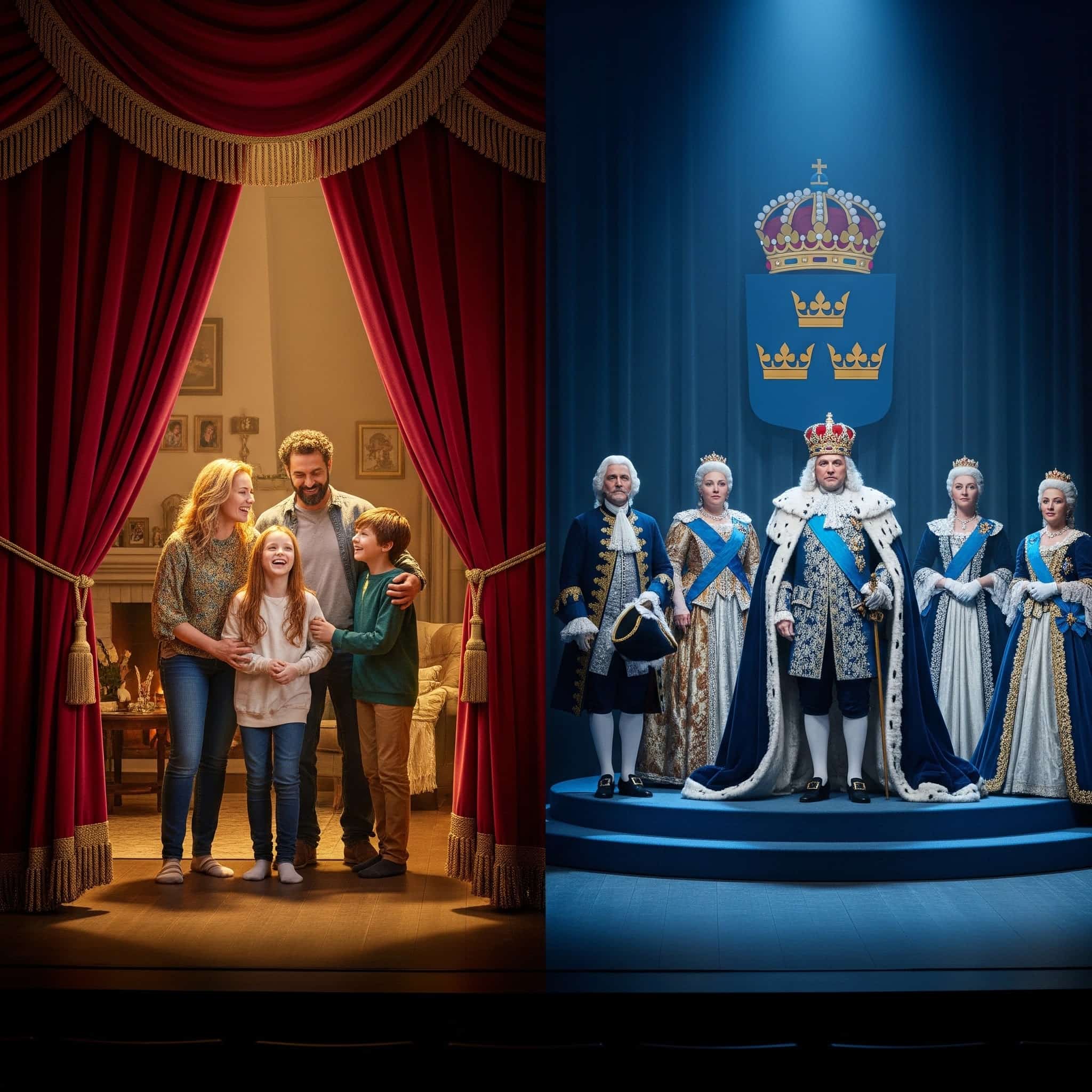
    The curtain is opening. The show is about to begin.

    This analysis is based on OSINT research into the Wallenberg family’s history, business practices, and public impact. Sources include financial records, historical documents, online interviews from experts and Swedish citizens. Also online readily available material of Jacob Wallenberg giving talks or addressing media. The position the column takes is the personal opinion of the author!*AI image for illustrative purposes ONLY!


  • The Land Title Trap-EUDR and the Dispossessed Female Coffee Farmer in Tanzania

    The Land Title Trap-EUDR and the Dispossessed Female Coffee Farmer in Tanzania

    EUDR—The EU Deforestation Regulation comes into effect in 2026 and will be mandatory for small and medium enterprises.

    The regulation will ensure European consumption doesn’t lead to the alleged loss of global forests. Commodities like coffee, cocoa, and palm oil must be deforestation-free. They must also follow the laws of the country where they’re grown.

    Statistics and Facts: The Land Title Trap

    The legality requirement. Previous certifications were voluntary. EUDR makes legal production a mandatory trade rule. The farmer must prove legal right to use the land.

    Title deed deficit. Tanzania’s Land Act and Village Land Act give women equal rights on paper. Customary norms often override the law. Many women farm land owned by fathers, husbands, or brothers.

    Systematic exclusion. EUDR needs a direct link between geolocation and the legal producer. No formal title? Excluded. Can’t sign due diligence statements that EU importers need.

    Coffee is one of Tanzania’s top exports. Earns over $160 million annually. The EU is the primary destination for premium Kagera Arabica. If female smallholders are excluded, national export revenue drops.

    The Breaking Point: 2026 and the Erasure of the African Woman Farmer

    UN calls 2026 the International Year of the Woman Farmer.

    But in the coffee highlands of Kagera, Tanzania, something quiet and devastating is happening. Global forums talk about empowering rural women. Meanwhile, the EU Deforestation Regulation is building a digital fence around the European market.

    Tanzania. Women are over 67 per cent of farm labour. Yet they face the steepest climb to meet Brussels’ green requirements. EU high-tech environmental mandates hit traditional patriarchal land systems. Breaking point.

    The land title trap isn’t just legal paperwork anymore. It’s a wall. Threatens to push thousands of women out of the global coffee chain. Turns their life’s work into illegal produce overnight.

    The Widow Who Doesn’t ‘Exist’ on Paper

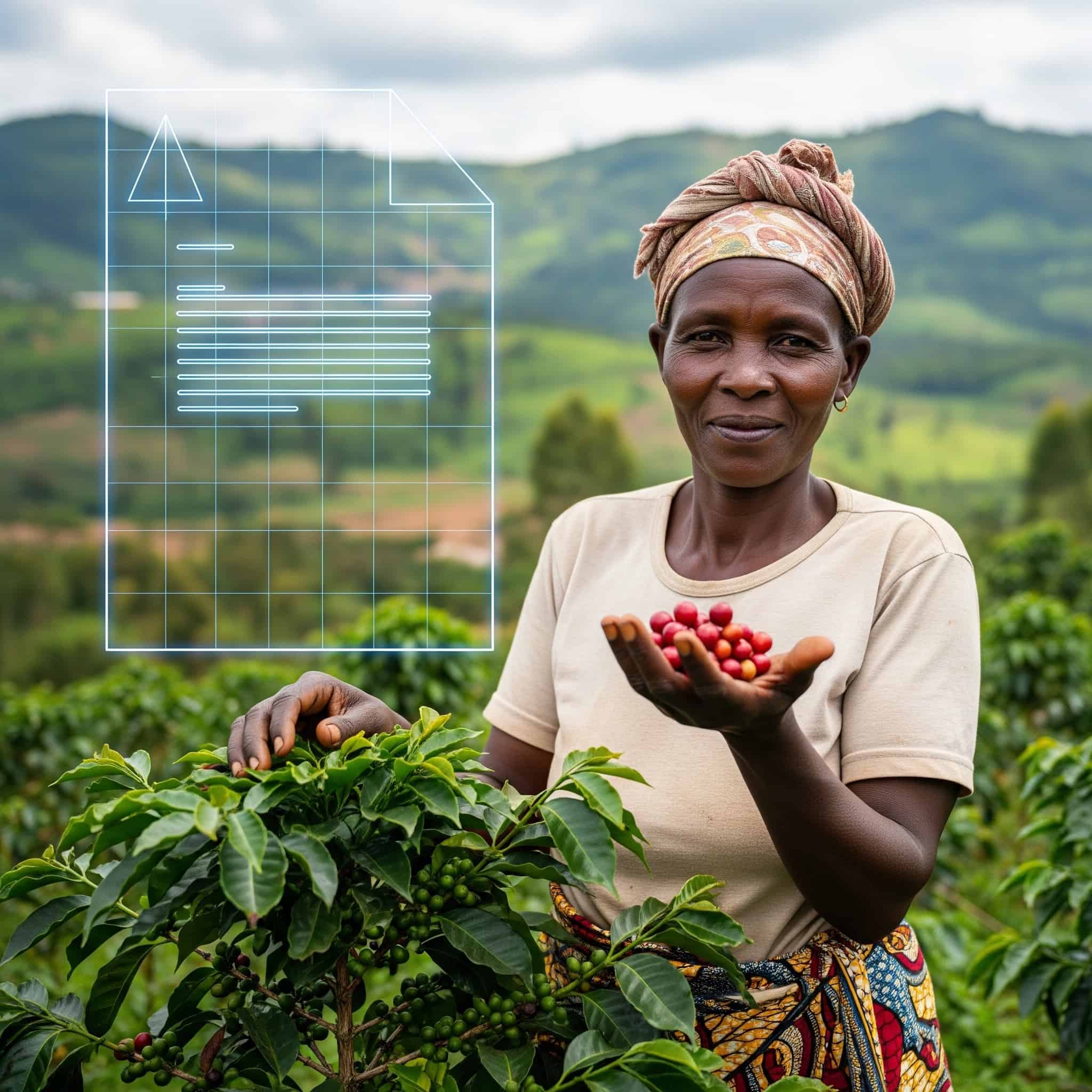
    Lush rolling hills of Kagera. Mama Joy (not real name) has tended her two acres of Arabica coffee since the 1990s. For decades, her harvest paid for school fees. Home improvements.

    Now, as the 2026 EUDR deadline for smallholders gets closer, her cooperative gave her bad news. Her coffee may soon be unsellable in Europe.

    Not because of bean quality. Not because of tree health. But because of a piece of paper. To comply with EUDR, mama Joy needs two things. Exact GPS coordinates of her farm. And proof of legal production under Tanzanian law.

    She has the coordinates. But the legal proof is a trap.

    Her village follows local customs. Land is still registered in her late husband’s name. She’s farmed it for thirty years. But she holds no formal title deed in her own name.

    Satellite in Brussels sees a deforestation-free success story.

    EUDR auditor sees a legal ghost. No title deed matching her ID. Her coffee becomes non-compliant. Banished from the European market.

    The Fact: EUDR and the Legal Identity Gap

    EU Deforestation Regulation (EUDR). This regulation is mandatory for small and medium enterprises in 2026. Historic attempt to make sure Europe doesn’t drive forest loss elsewhere.

    Products like coffee must be deforestation-free. They must also follow the laws of the country where they’re grown.

    Here’s the gendered barrier.

    Legality requirement. Old certifications were voluntary. EUDR makes legal production a mandatory trade rule. The farmer must prove legal right to the land.

    Title deed deficit. Tanzania’s Land Act and Village Land Act give women equal rights on paper. But customary norms often override the law. Women farm land owned by fathers, husbands, and brothers.

    Systematic exclusion. EUDR needs a direct link between geolocation and the legal producer. No formal title? Excluded. Can’t sign due diligence statements. EU importers won’t touch it.

    The 2026 Deadline: A Crisis of Displacement

    December 2026 deadline for smallholders. A land title trap triggers a de-risking wave. Global coffee buyers, scared of fines, narrow their supply chains to low-risk producers. Large estates. Male farmers with clear paper titles.

    One of Tanzania’s top exports is coffee. They earn over $160 million every year. The EU is the primary destination for premium Kagera Arabica. Exclude women, and national revenue drops.

    Poverty trap. Women like Mama Joy lose the EU market. Sell to secondary markets for much less. A green discount that punishes women for a land system they didn’t create and can’t easily change.

    A Call to Action: Securing the First Mile

    International Year of the Woman Farmer 2026. Want a legacy in Tanzania? Fix the land title trap. Fast. Gender-sensitive reform.

    First, accept the right of occupancy alternatives. Lobby the EU. Accept letters from village councils. Customary rights of occupancy. Recognise women farmers even without formal state title deeds.

    Second, mass land titling for women. Tanzanian government. EU Global Gateway support. Launch emergency first-mile titling. Mobile land clinics. Fast-track Certificates of Customary Right of Occupancy for women coffee farmers before the deadline.

    Third, data sovereignty for cooperatives. Empower AMCOS. Let them hold master titles or collective legality certifications. Cover all members. Shield individual women from personal land audits.

    The Breaking Point: A Choice for 2026

    Breaking point. The EU wants a clean supply chain. Noble. But implemented without looking at patriarchal land realities in the Global South? Becomes a tool of dispossession.

    We can’t let the green transition become a male transition. We can’t celebrate the woman farmer with one hand while a bureaucrat in Brussels signs away her livelihood with the other.

    Authentic partnership means deforestation-free doesn’t mean woman-free. Bridge the gap between land and deed. Otherwise, the EUDR stays a trap. Catches the very people it should protect.

  • A Letter From Sweden: Finding Kiswahili in a Cold Climate

    A Letter From Sweden: Finding Kiswahili in a Cold Climate

    Winter here isn’t just cold. It presses down on you. Gray sky. White ground. Sun barely shows up. January in Sweden, the air cuts your lungs the second you step outside.

    You bundle up. Wool. Down feathers. Just your eyes showing.Walking through snow last Tuesday, something hit me. The coldest part of being far from home isn’t the wind. It’s not hearing your own language.

    Language wraps around your thoughts. When I speak Swedish at the store or English at work, I’m wearing a public coat. Polite. Efficient. People understand me. But I’m not fully me. My heart beats different when Kiswahili hits my ears.

    That’s the language of being little. Of my people before me. It holds the warmth I left behind.Finding Kiswahili here? Like spotting a diamond in ice.

    First time it happened on a bus. I sat by the window. Frozen trees outside. That heavy chest feeling nothing here can fix. Then from behind me, three rows back, a sound cut through. Not just words. The music of it.

    The rise and fall.”Sema kaka, mambo vipi?“Hit me like heat. My head snapped around before I knew I’d moved. Two men talking. They had no clue they just pulled me out of a hole.

    The bus didn’t feel so gray after that. Swedish quiet cracked open by home noise. I didn’t know those men. But those words? Made them family. That’s Undugu. Brotherhood living in how we shape our sounds.

    I’ve learned something here. You have to work to keep your language alive. Let it sit too long, it gathers dust in your head. You forget the slang. The way a proverb lands just right.

    That’s why my little apartment became a Kiswahili spot. Cooking dinner, trying to make kale act like sukuma wiki, I play music from back home. I did call my people not just for news. To wash my ears in the sounds I need.Something else too.

    Out here, they judge how you speak their language. Your Swedish has an accent, they figure your brain does too. Talk slower at you. Assume you don’t get complicated things. Makes you feel small. But slide back into Kiswahili? I’m big again.

    Words come easy. Funny. Sharp. Daughter of something that stretches across oceans.I think about this Story Hub I want to build. Reach a hundred thousand people in a few years. People ask why Kiswahili. Why not English so more folks get it.

    Here’s why. Kiswahili builds bridges that get stronger every day. It’s national language in more places now. Tanzania. Others. Going global. Using it doesn’t shrink us. Plants us in the big conversation.

    Says our stories matter in the sounds that made them.Being a polyglot out here gets lonely certain ways. Kiswahili from birth. English from school. Swedish because I need it. German creeping in now.

    Like rooms in a house. Some stay locked. Nobody to visit them with you. Meet another African in Europe, we start polite. English? In Sweden we go English or Swedish? Then the look passes between us. Silent question.

    Someone drops a Kiswahili word. Walls fall. Posture shifts. We stop being immigrants. Start being people. Talk about the shamba. Politics back home. Laugh deep. That belly shake Swedes find too loud for public.

    Taught me something real about fitting in. Some think fitting in means shedding who you were. Becoming just like them. I see it different. Be a bridge. I can appreciate their Lagom. That just enough thing.

    Still carry Kiswahili abundance. Follow their road rules. Sing songs from the coast.To my people back home. Don’t sleep on your language. You breathe sounds you love every day. You don’t have to hunt for your mother tongue.

    Out here? Every Hujambo prays something. Every Asante remembers.Sun sets at three here. Dark creeps in. I turn my lamp on. Write. Simple English so you can read this. But my head thinks in home rhythm.

    Snow falls outside my Sweden window. Inside though? The words I carry make it summer.We’re not just bodies crossing borders.

    We’re libraries on the move. Songs walking around. Long as we keep speaking. Keep sharing these letters in languages that hold us. The cold can’t win all the way.